
Meet the Lost Souls of BARDO
In BLACK LODGE, the gothic rock opera coming to Memorial Hall the eve of Halloween, a tormented writer—based on the surrealist William S. Burroughs—is trapped inside the worst moment of his life. The creators of the opera, composer David T. Little and librettist Anne Waldman, imagine that he’s stuck in Bardo, a concept drawn from Buddhist tradition that represents a place between life and death where the soul wanders.
But audiences won’t just witness Bardo from their seats. Before BLACK LODGE begins, they’ll enter it themselves.
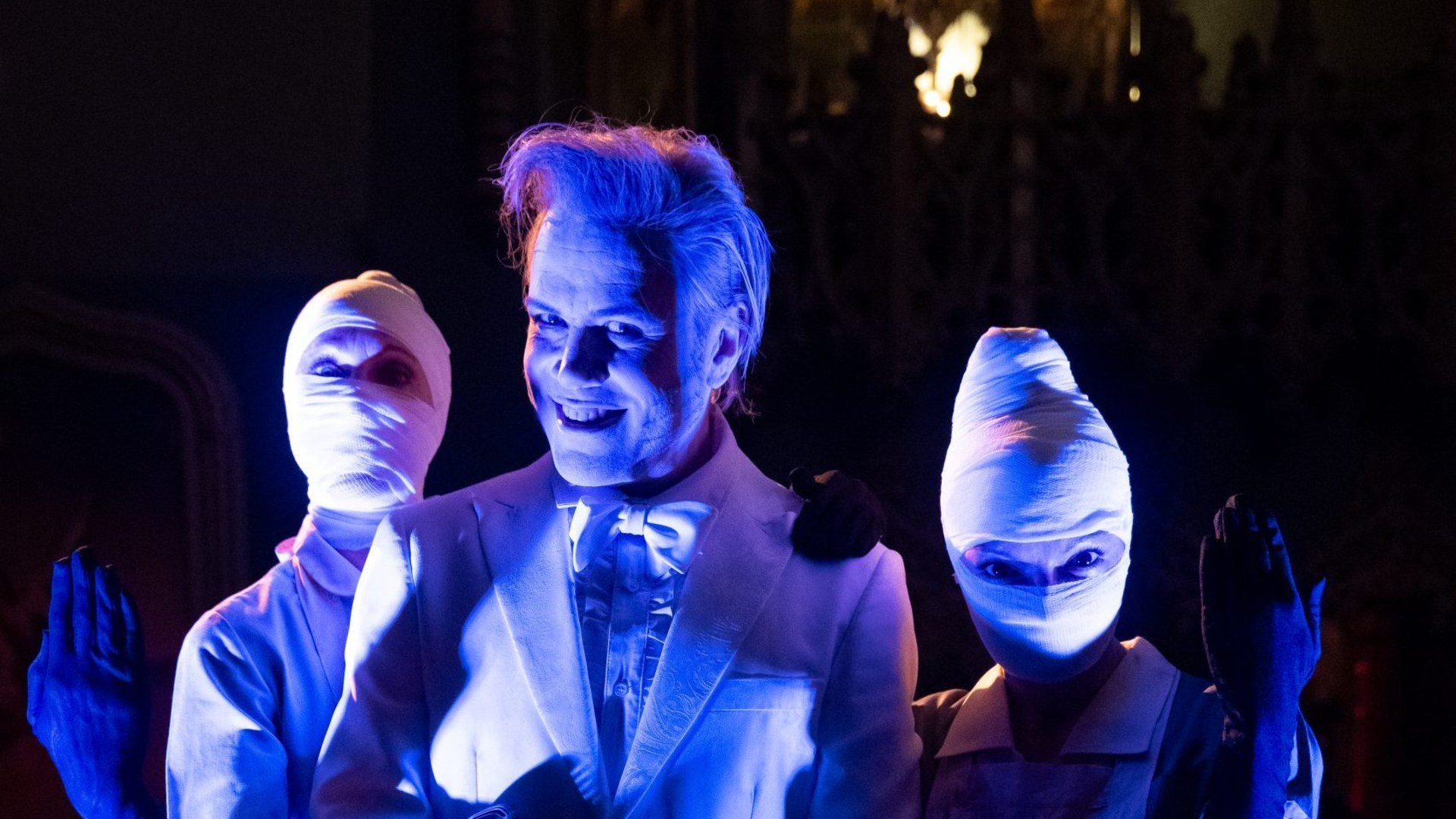
BARDO, a pre-show, immersive theatrical experience specifically designed to introduce audiences to the world of BLACK LODGE, will transform all of Memorial Hall—including spaces not typically seen by audience members—into an unrecognizable world, populated by a Lynchian cast of characters who are also trapped in this liminal space, reliving their worst nightmares.
Directed by Sandra Powers and choreographed by Sindy Butz, BARDO features a cast of local actors, dancers, and specialty performers. The production was reimagined for the architecture and spaces of Memorial Hall, as well as for the talents of the local artists.
“For this one special night a year when the veil is thin, you can meet all of the tormented souls who have been stuck in Bardo for centuries,” says Powers, including carnival acts, burlesque dancers, clairvoyants, and a manifestation of death, who writes poetry based on audience prompts.
Part haunted house and part immersive theater, BARDO will begin at 7 p.m., two hours before BLACK LODGE. Audiences can enter any time before 8:30 p.m.; plan for the experience to last around a half hour (and feel free to join the inhabitants of BARDO by wearing a costume).
Below, meet some of the lost souls you’ll encounter during your visit to BARDO.

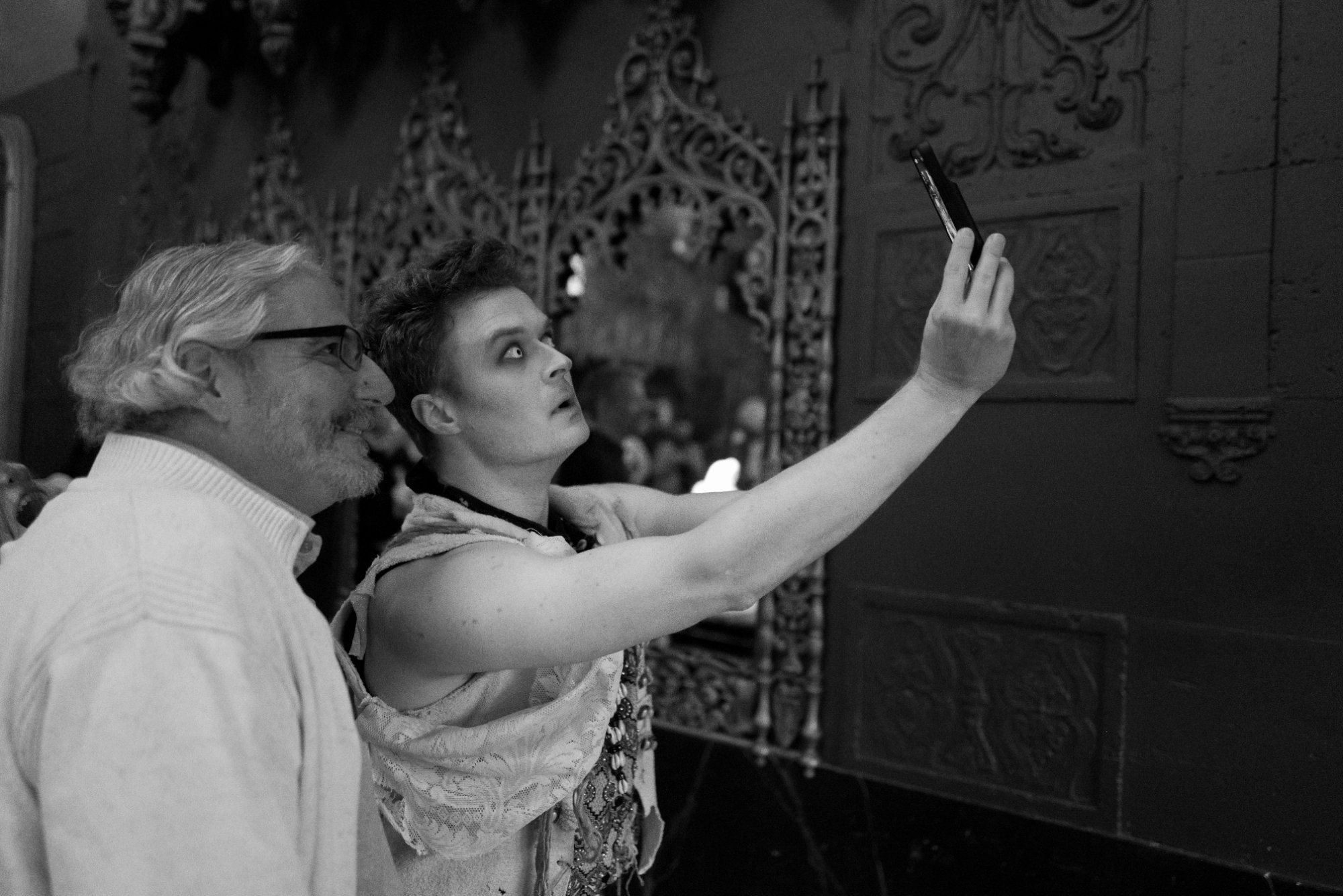
BARDO at CAP UCLA, 2024. Photos by Jason Williams.
The Hungry Ghosts
In Buddhism, hungry ghosts are beings who are tormented by intense, insatiable desires they’ll never be able to fulfill. In BARDO, they are the first characters you’ll meet upon your arrival. Think of them as the average citizens of this strange world, says Powers, and as the bridge between you, the audience, and the many other figures you’ll come across. “They’re the messengers; the communicators,” she says. Don’t be surprised if a hungry ghost asks something of you for access into BARDO. “You have to release a moment of vulnerability to enter this world, and meet all these vulnerable, tormented artists,” Powers says.
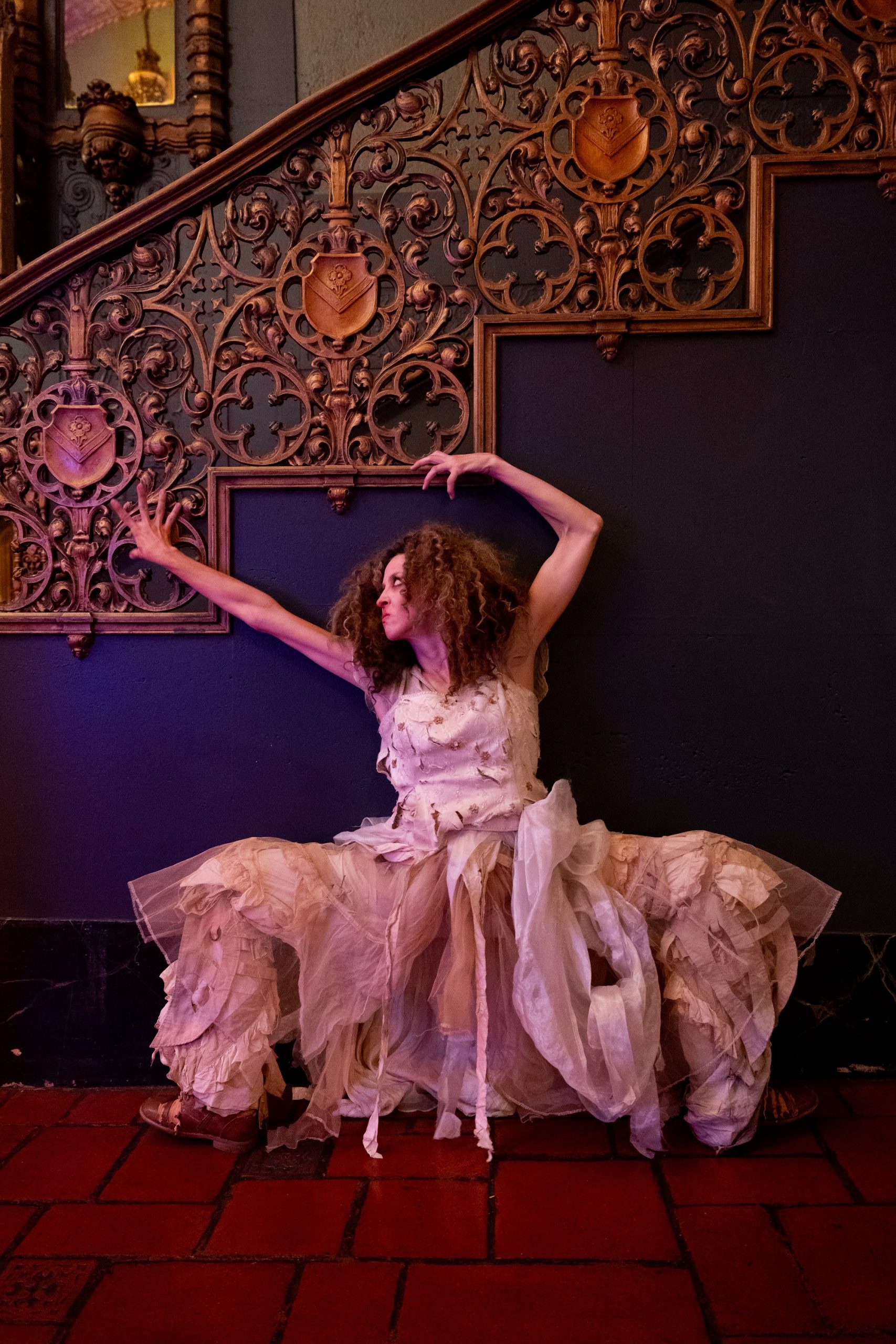
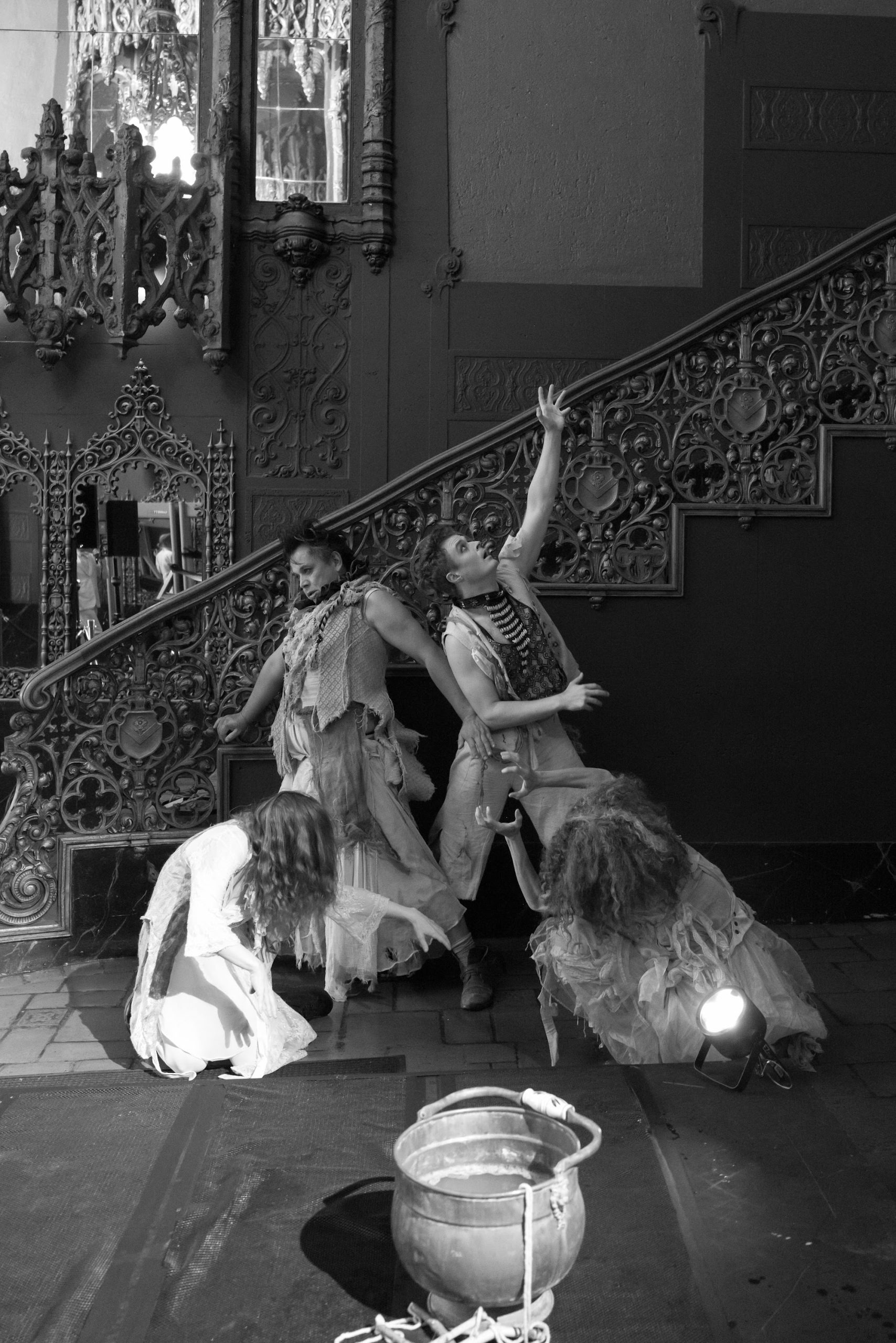
The hungry ghosts in BARDO at CAP UCLA, 2024. Photos by Jason Williams.
Dive deeper: Some of the characters you’ll meet in BARDO also appear in BLACK LODGE. Listen closely to the opera, and you may hear more about the hungry ghosts.
The King of Bardo
The King runs things in BARDO, and he isn’t shy about using his power. “When he says he wants something, everyone comes rushing,” says Powers. “When he says you have to do something, everyone listens.” Is he corrupt? Probably—but you’ll have to decide for yourself once you experience what the King has in store for your visit.
Dive deeper: The King of Bardo was inspired by the carnival ringleader. “He’s a big showman,” says Butz. “He’s very entertaining, and a different vibe than the other creatures—lots of irony and humor.”
The Snow Dancer
As compared to some of the other characters in BARDO, the Snow Dancer may at first seem serene. A woman in a pale blue dress, she dances as snow falls on her, as if she’s inside a snow globe. But while the Snow Dancer may represent something akin to “a beautiful, loving memory,” says Powers, the scene is more disturbing than it may initially seem. “This dancer has been stuck dancing in the snow for a long time,” says Powers. “She looks a bit more ghastly than she did when she first began.” “It’s this loop of never-ending pain,” agrees Butz.
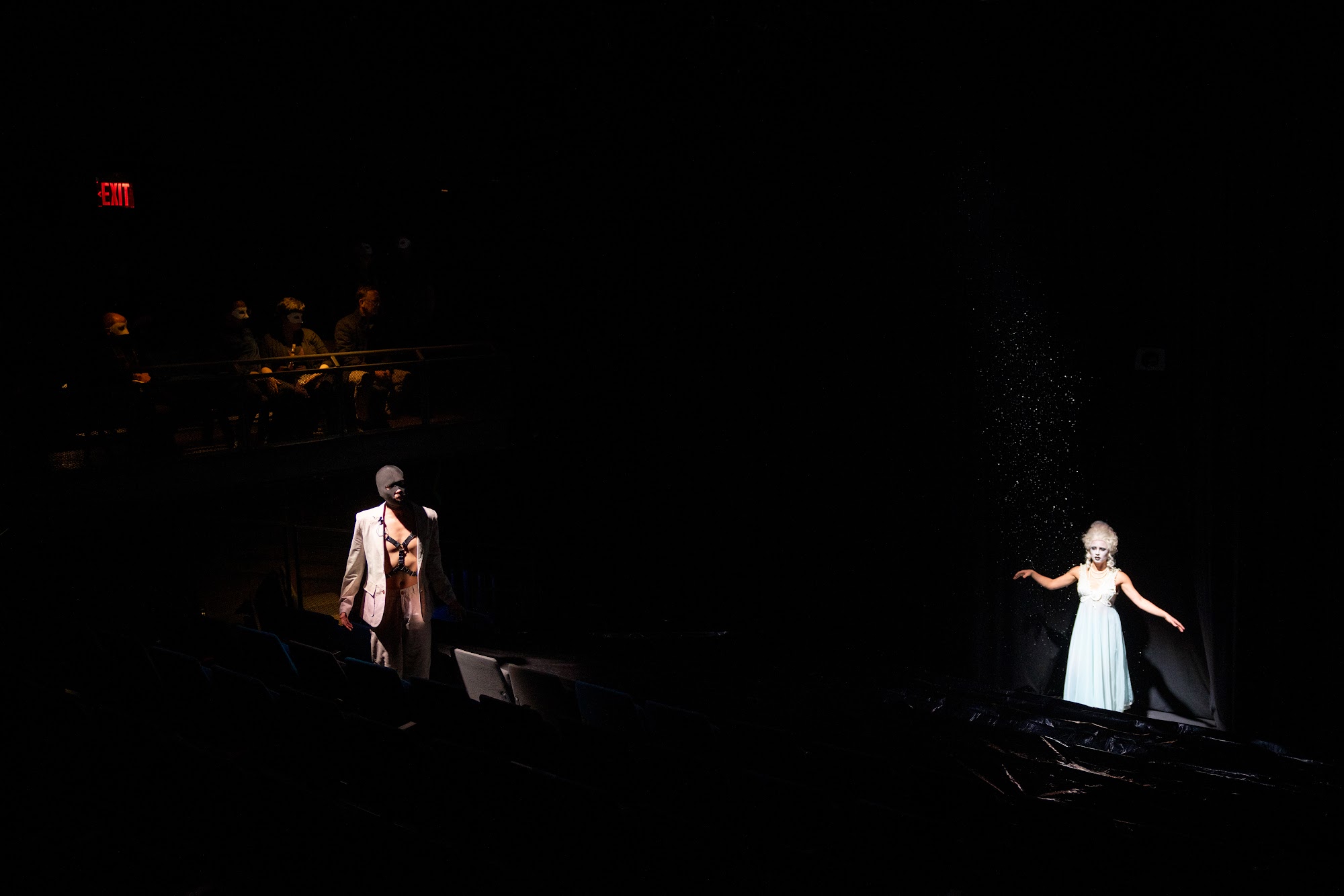
Dive deeper: The Snow Dancer is the only character who won’t be performed by a local artist. She’ll be played by Butz herself, who will bring to the role her training in Butoh, a Japanese dance form known for its distinctive slow movement.
The Tortured Writers and the Ridiculer
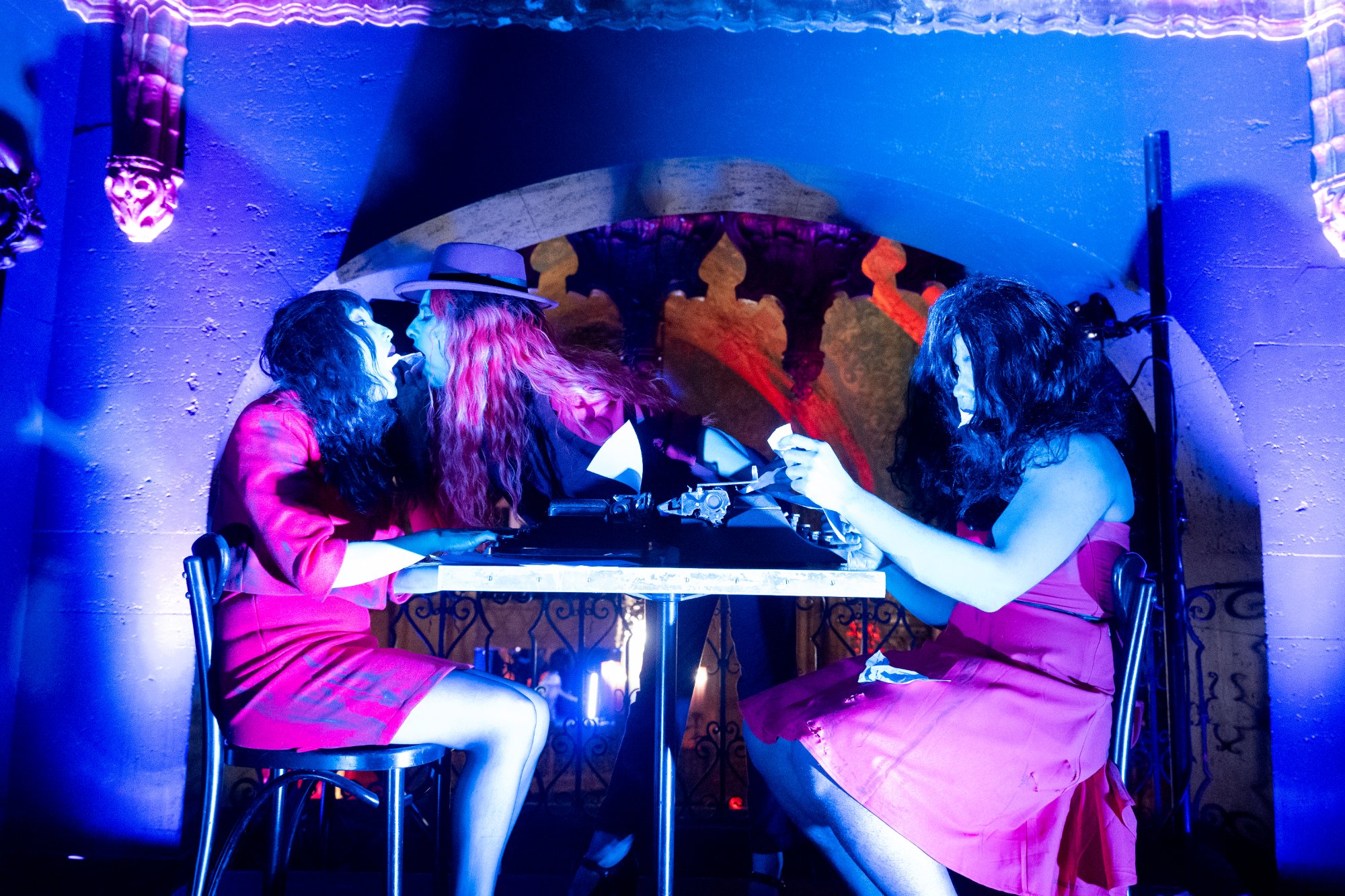
Like the main character of BLACK LODGE, many of the characters stuck in BARDO are artists, including the two tortured writers, who are in purgatory sitting at their typewriters. Their attempts to write their masterpieces are disrupted by a character known as the Ridiculer. “Every time they try to get past this one word, they can’t, because the Ridiculer starts yelling at them,” says Powers. The Ridiculer represents the self-doubting voice that many artists contend with “that keeps telling you that you’re a fraud; that you’re horrible; that what you’re doing isn’t art,” she says.

Dive deeper: The work of avant-garde theater and opera director Robert Wilson was an inspiration for this scene. It’s a wink to knowing audience members: Wilson collaborated on the opera The Black Rider with Burroughs, whose life is the source material for BLACK LODGE.
The Nurses
“Nurses represent so much,” says Powers. “They’re healers, but they’re also people you don’t necessarily want to see because that means you’re in a hospital and something has happened.” The two nurses play with this duality, which they express through dance. “They have this contorted, crazy movement,” says Powers.
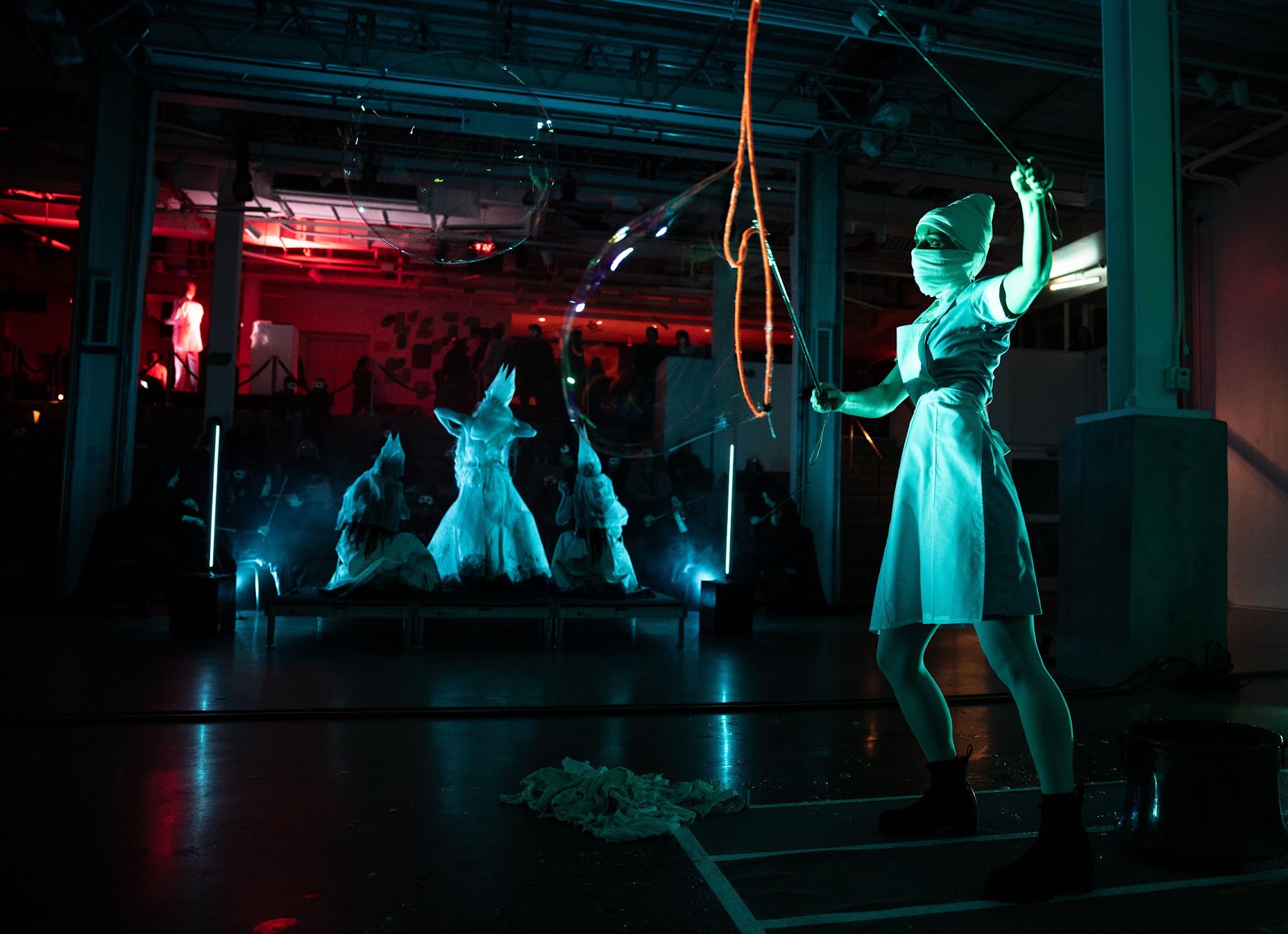
Dive deeper: The nurses are inspired by David Lynch, and their costumes are authentic nursing uniforms from the 1950s, during the time of William S. Burroughs.
The Demigods
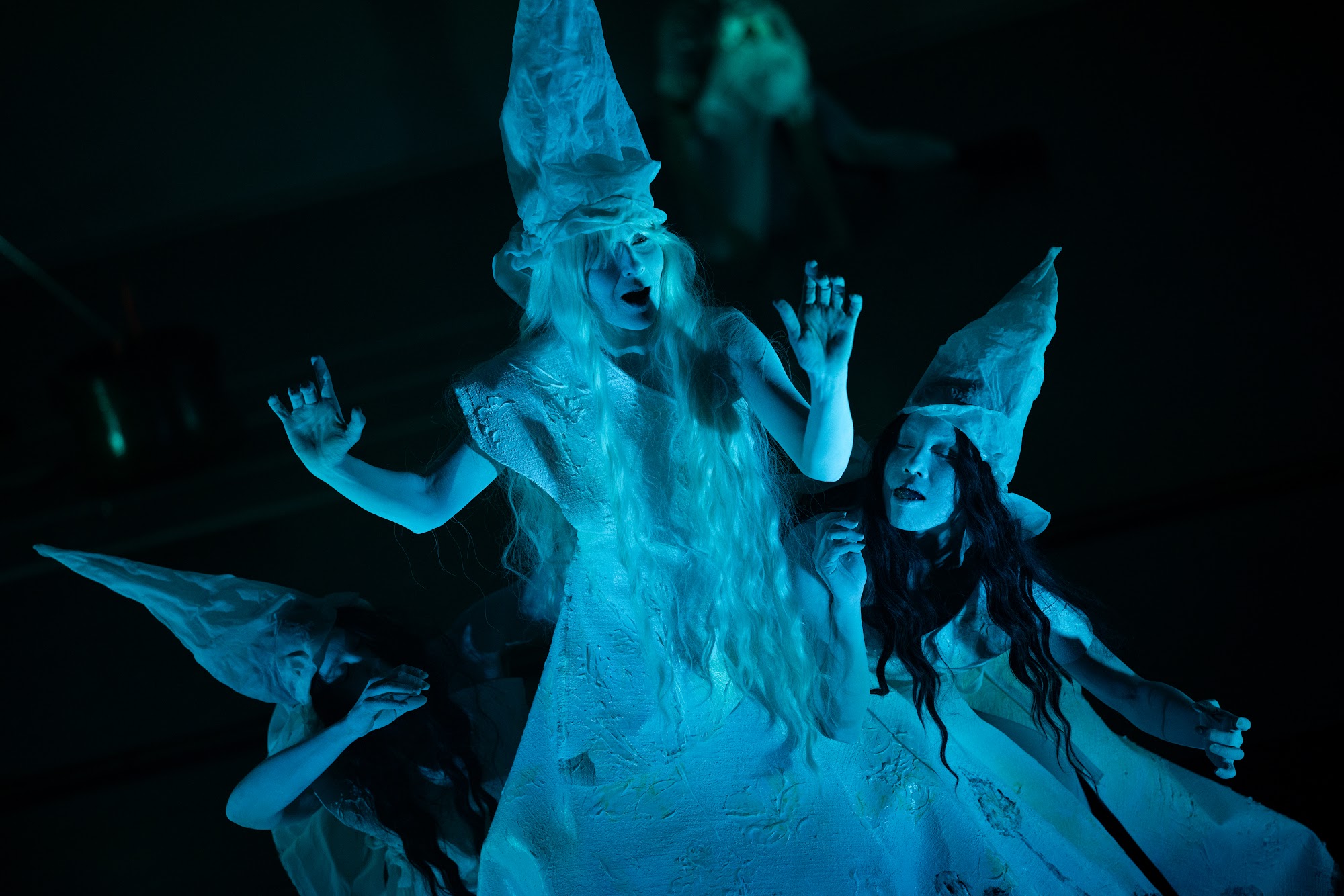
The demigods, three dancers who are painted white and who wear striking sculptural costumes, are a physical representation of what it feels like to be trapped in BARDO. Butz describes them as a tableau vivant, or as a living monument to the world of BARDO. The movement, which is inspired by Butoh, “really shows the emotions of being trapped; of time moving like molasses; of the agony of feeling stuck,” says Powers.
Dive deeper: The demigods’ costumes were handmade by Butz, who is a sculptor in addition to being a movement artist. They were inspired by the paintings of German artist Anselm Kiefer. “The demigods are truly wearing sculptural pieces of art,” says Powers.

BLACK LODGE and BARDO come to Memorial Hall on Friday, October 30. BARDO opens at 7 p.m., and BLACK LODGE begins at 9 p.m. A single ticket includes both experiences.