The TEAM’s Reconstructing: How Do We Walk Through Our Histories Together—And Should We?
by Lauren Wingenroth
This blog is part two of our Southern Futures series. Read part one here and part three here.
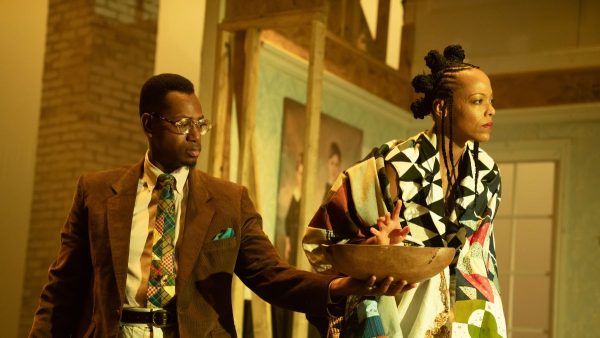
Early on in the TEAM’s Reconstructing, there’s a scene that takes place in a former plantation house located on a college campus. In it, two academics collaborate on a project that, on its surface, concerns itself with polyrhythmic music, but on a deeper level seems to interrogate their own professional relationship as a Black woman and a white man. Throughout the scene, the house—and the histories and memories contained within it—makes itself known, a presence that’s felt differently by the two characters.

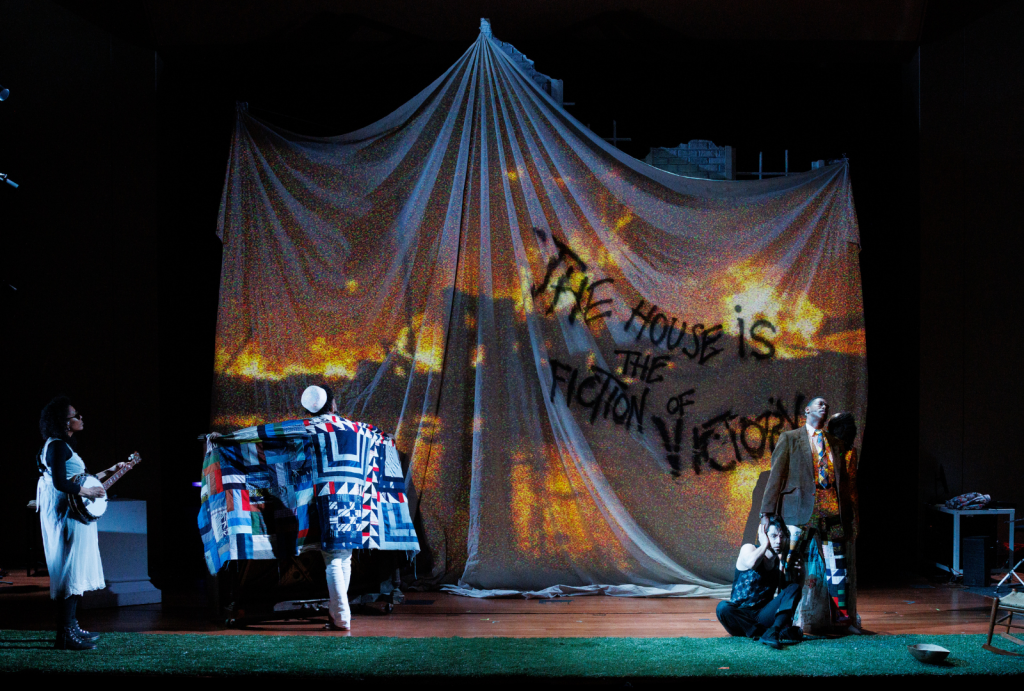
The scene captures many of the themes that Reconstructing will return to again and again: if and how intimacy can exist between Black and white people; how we relate to our histories; the vulnerability inherent in undertaking a collaborative process; how the enduring legacy of slavery lives within both places and people. But it also speaks to just how resonant the play, which came to Carolina Performing Arts on February 21, feels on this campus.
“It has a particular resonance in a place like North Carolina, in a place that is probably aware of its history and aware of the buildings that were built by enslaved people,” says Eric Berryman, one of Reconstructing’s co-authors and performers. “I’m very excited to do the piece at CPA for what it will bring up for audiences that are familiar with that history, and hopefully for audiences who aren’t. Hopefully it makes them look around at their surroundings a bit differently.”
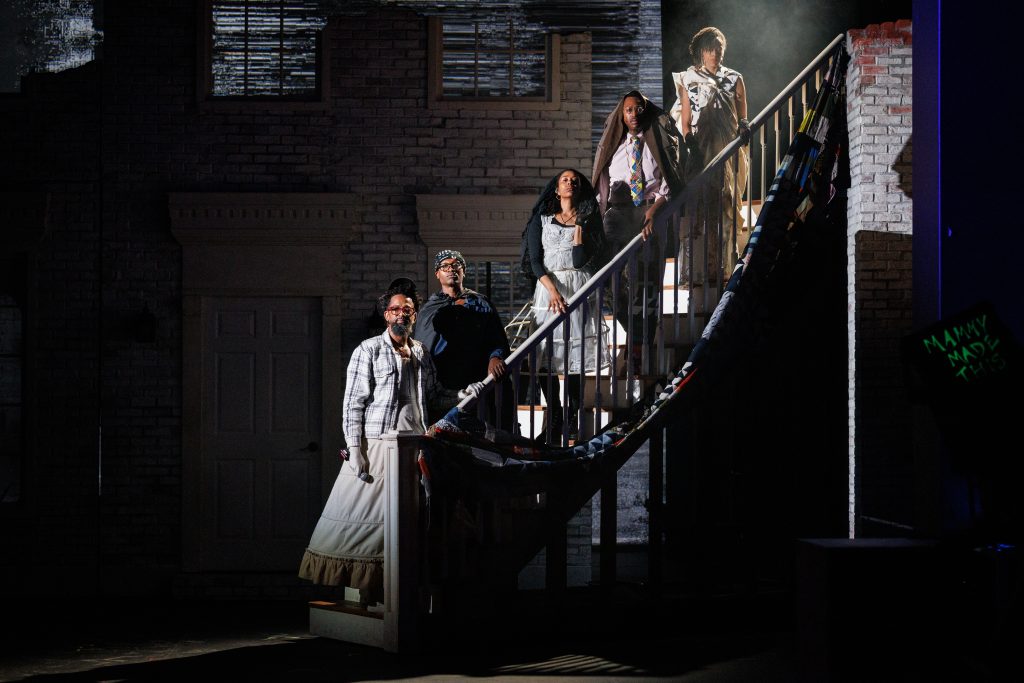
Reconstructing is the product of eight years of research and conversations by the TEAM, a Brooklyn-based experimental theater collective that makes work “about the foundational aspects of America,” says Berryman. In addition to Berryman, the work’s collaborators include artists like Ato Blankson-Wood, who originated a role in Jeremy O. Harris’ Slave Play, and Rachel Chavkin, director of Broadway hits Natasha, Pierre, & The Great Comet of 1812 and Hadestown.
The TEAM works nonhierarchically, and makes work through a yearslong devising process. In other words, instead of one playwright who crafts the script for the actors to memorize, the TEAM, “writes as we go, as we explore,” says Berryman. The resulting script is based on research, improvisation and text transcribed directly from conversations between collaborators.

Some of this process happened in Chapel Hill, through a yearslong Southern Futures residency. It’s hard to imagine a project better-suited to the mission of Southern Futures, an initiative within CPA and across UNC that seeks to reimagine the South and the stories we tell about it. “I believe that the piece itself is reshaping Southern stories,” says Berryman. “Some people think ‘must we keep talking about this?’ But many of us feel that yes, we should keep talking about it. So how do we keep talking about it so that it feels new? How do we engage with it?”
The TEAM’s research-based process involved collaborators investigating their own family histories and connections to slavery, whiteness and the South. “Sometimes the research doesn’t make its way into the play in a seen or heard way, but it all shows up in a spiritual way,” says Berryman.
“Or, you research something so you know what not to do, which is very important.”
Eric Berryman
This investment in research aligns with a key tenant of Southern Futures and CPA, which see artists as researchers and scholars. “Artists are constantly in a research mode as they create new work,” says Amy Kolling, CPA’s senior director of artistic and production.
“Our commitment to offering research residencies to artists acknowledges that and invites them into the university context with all of the resources it holds.” – Amy Kolling
Indeed, works like Reconstructing that involve many years of deep consideration and investigation can only exist with the space and time that comes with a program such as Southern Futures. “A piece like this requires time, it requires long-term funding,” says Berryman. “You can’t quickly reshape history. You can’t quickly reshape the way theater is done. Time and funding allowed us to make something that is challenging, and that requires further engagement. The piece exists beyond the ninety minutes that you paid for.”

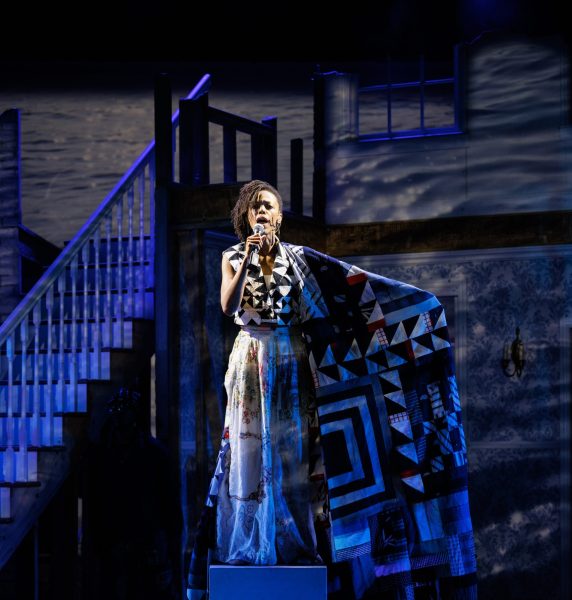
Challenging as it may be, Reconstructing is also a riveting and dynamic piece of theater with a powerful original score, played live, as well as moments of humor, dance, and deep humanity. The highly metatheatrical piece is a kind of biography of the show itself, mirroring both the challenges and the transformation the creators experienced in making it.
“They really made room for each artist to bring their own unique practice and curiosity and history into the piece,” says Kolling. “It seems like a restorative practice – both personal and transformative.”