A Rare Return: Culture Mill’s Eclipse Back at Carolina Performing Arts
by Lauren Wingenroth
This blog is part three of our Southern Futures series. Read part one here and part two here.
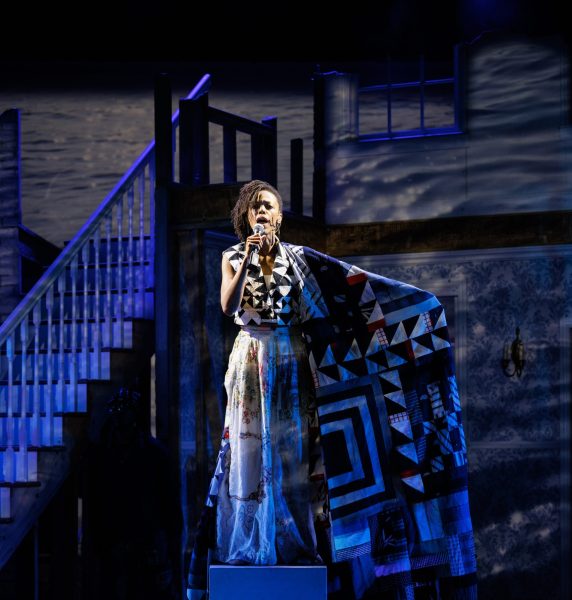
Four years ago, Eclipse premiered at Carolina Performing Arts, the first in a series of many performances resulting from CPA’s Southern Futures residencies.
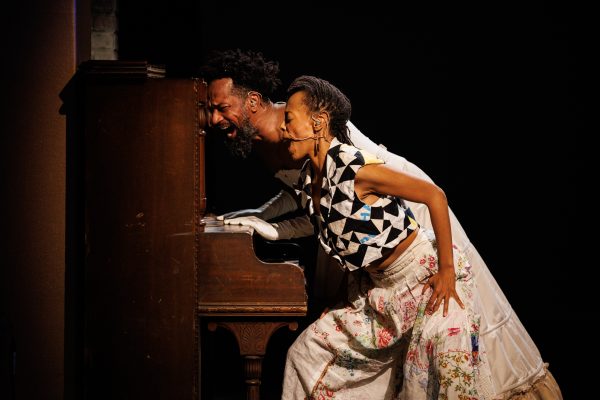
The work, which was created by artists collaborating through Saxapahaw-based performing arts laboratory Culture Mill and inspired by Geeta N. Kapur’s To Drink From the Well: The Struggle for Racial Equality at the Nation’s Oldest Public University, explored the history of the land it took place on and the ways we experience that history in our bodies.
Eclipse was something of a catalyst, sparking a series of multidisciplinary spin-offs, like a geography class co-taught by Culture Mill artists, a poetry collection, and another performance installation, Bloc, which applied a similar lens to Chapel Hill’s historically Black Midway district. It also came to represent something foundational about what Southern Futures at CPA was and could be, acting as a prototype for future residencies, which Culture Mill co-directors Tommy Noonan and Murielle Elizéon also contributed to.

So it only feels right that, after four years of both Southern Futures and Eclipse deepening and expanding, the piece is returning to CPA, a rare opportunity for audiences to engage with a work for a second time.
“We rarely have a chance to present something twice, so we’re really excited about that opportunity,” says CPA’s senior director of artistic and production Amy Kolling. “Eclipse is created and performed by artists who have built creative practice based in restorative justice – that felt new and inspiring to us and informed the way we designed all of CPA’s Southern Futures residencies.”
It is both the way Eclipse was created and the questions it asks that so vividly exemplify Southern Futures, an initiative at CPA and across UNC that seeks to reimagine the South and the stories we tell about it through research and interdisciplinary collaborations. Rather than prescribing deadlines or expectations about what artists should produce, Southern Futures residencies allow artists the freedom and flexibility to follow where their artistic and research interests lead them. That “allowed us a lot of leeway to develop this,” says Noonan.
“Instead of having a concept and then executing it, we work in emergence. We’re always asking ourselves the question, What is important now?”
Tommy Noonan
For Noonan and Elizéon, “working in emergence” looked like prioritizing embodied knowledge as they investigated the land that would both host Eclipse and act as its subject matter: the Joan H. Gillings ArtSpace at CURRENT and the surrounding courtyard.
“Instead of starting with content and theme, we started with the practice of standing with our two different bodies in different places and noticing everything.” – Tommy Noonan
They also employed restorative practices, consulted archival materials and land records, and collaborated with a large interdisciplinary team including dancers, sound artists, poets, and restorative practitioners.
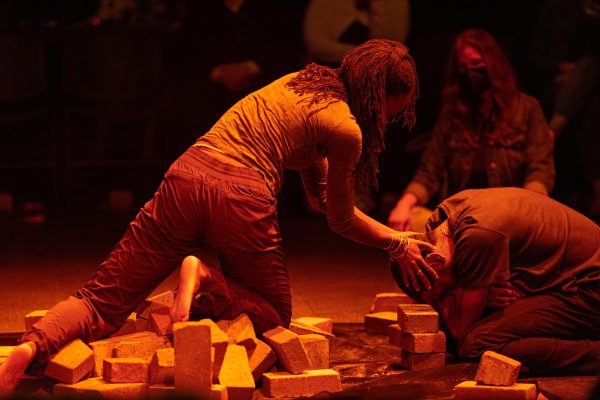
Eclipse’s content, too, speaks directly to the mission of Southern Futures, as it probes what the history of the literal ground both audiences and performers walk on can tell us about UNC, the South, and ourselves. “It’s a catalyst for reckoning with our past and understanding where this all came from and considering how that makes us feel,” says Kolling. “It’s very in-your-body, with your feet on the ground.”
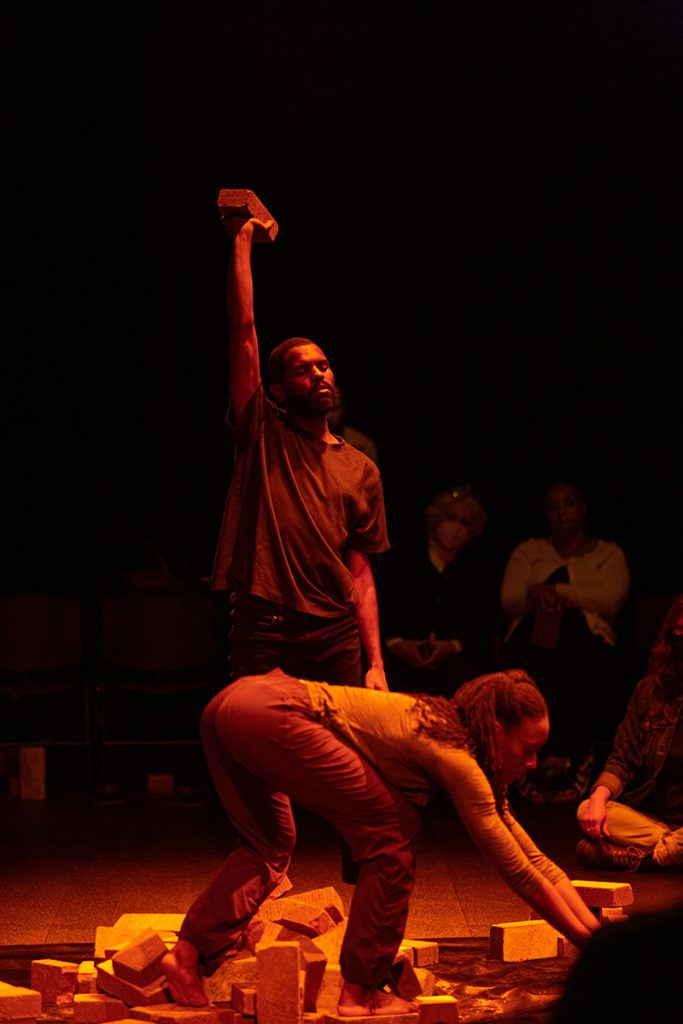
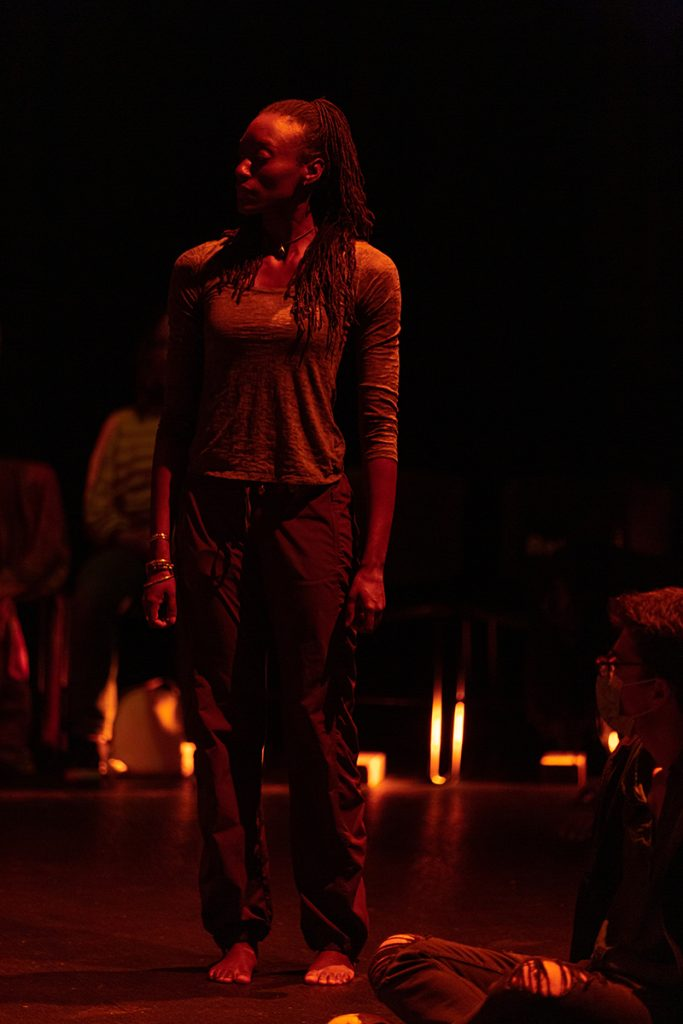
As much as Eclipse engages with the past, it is equally concerned with the “future” part of Southern Futures, as it questions whether it would be possible to build an imaginary alternative monument, a representation of “an impossible idea of a Southern future,” says Noonan.
The cohort of artists imagining this possible Southern future—which in addition to Noonan and Elizéon includes poets Cortland Gilliam and CJ Suitt, sound artist Caitlyn Swett, dancers Anthony ‘Otto’ Nelson Jr. and Jasmine Powell, and many others—are all locally based.
“Our whole ecosystem of collaborators have deep roots in this place, and have had a constant presence in what it means to dig into the soil of this place that I think is unique.”
Tommy Noonan
The four performances of Eclipse on March 30 and 31 and April 10 and 11 will be accompanied by several weeks of free events comprising the Southern Futures Assembly, which will include restorative listening circles, a lecture, and Well Practice, a listening and walking practice at UNC’s Old Well.
Eclipse will look different than it did four years ago. “This journey has deepened all of our experiences of the interrelationship between race, wealth, and power, and how they land on our different bodies differently,” says Noonan.
Talking about the history of UNC’s campus also feels different now, and is perhaps all the more imperative. “There’s a sense of risk to talking about history,” says Noonan. “That’s something to move towards, and engage with.”