
From the Archives: An Intro to Philip Glass
By Alex Ross
Originally published January 5, 2017, as part of the Glass at 80 festival.
When Philip Glass was studying at the University of Chicago in the 1950s, he formed a music-listening club with several friends, one of whom was the future astronomer Carl Sagan. As Glass relates in his recent memoir, Words Without Music, the group made a particular study of the symphonies of Bruckner and Mahler. (Glass’s father ran a record store in Baltimore, and the young man had access to a large library of records.) What struck him most was not the late-Romantic grandeur of the music—at the time, he was more attuned to the lyrical modernism of Bartók and Berg—but simply the scale on which Bruckner and Mahler worked, the “very big canvas” they employed. In the mid-twentieth century, when the god of modern composition was the hyper-compressed serialist Anton Webern, Glass caught a glimpse of future vastness, of music that would unfold before one’s ears like a landscape reaching to a far horizon.

A few decades later, after a wide-ranging education that included counterpoint with Nadia Boulanger and ragas with Ravi Shankar, Glass was ready to exhibit his big canvases: Music in Twelve Parts for instrumental ensemble (1971-74), which generally lasts four hours in performance; and Einstein on the Beach, for singers, actors, dancers, and musicians (1975-76), which goes on for five hours or more. Although Glass has composed much music since that time, and his output is still evolving, those masterworks of the seventies are sufficient to carve his name in music history. They brought several new kinds of wonder into the world: a revitalization of the most basic materials of music; a renovation of our experience of musical time; a mysterious emotional warmth that rose up from a cool, almost mathematical process. Bruckner’s symphonies are an apt point of reference, and it’s fitting that the Bruckner Orchestra Linz, which appears in this Glass at 80 Festival on Feb. 17, has become one of the composer’s strongest advocates.
I vividly recall the moment at which the full extent of Glass’s achievement became clear to me. Before Einstein went on a global tour in 2012, it had gone unperformed for twenty years. I was too young to have seen the early outings, and missed the 1992 revival, at the Brooklyn Academy of Music. No video was available, and the Nonesuch recording, bewitching as it was, told only part of the story. In January, 2012, I traveled to Ann Arbor, Michigan, to see a preview of the tour. I wondered how well the work would hold up against its legend. For an hour or so, I felt detached from the experience, as if observing a museum piece. Then Lucinda Child’s dancers came out to perform “Dance 1,” and I entered a state of bliss that persisted until the end. The dancers were beautiful to watch, swirling about in elegant ecstasy, and they also pointed up the complexity of Glass’s rhythmic schemes, the way he sustains constant repetition through constant change. (The 1979 piece Dance, which the Lucinda Childs Dance Company will present on February 7 is a large-scale extension of the Einstein collaboration.)
People think that Glass’s music depends upon a recycling of familiar gestures: a slow-moving arpeggio in the manner of an old-fashioned Alberti bass; stately chord progressions, often in the minor mode; curt melodic ideas that recur in ritualistic fashion. We should remember first that this air of familiarity is a latter-day phenomenon: Glass’s trademark style sounded radically strange when it was first deployed. And what really matters is not the material you find in any given bar but the luminous structure that rises from those simple building blocks. Glass said of Music in Twelve Parts: “Music is placed outside the usual time scale, substituting a non-narrative and extended time sense in its place. It is hoped that one would then be able to perceive the music as a ‘presence’, freed of dramatic structure, a pure medium of sound.” Glass’s big forms don’t overpower you, in the Romantic manner; they envelop you, offer a space of habitation.
This idea of the art-work as “presence” did not, of course, originate with Glass. It proliferated all over lower Manhattan in the golden age of the downtown avant-garde, in the sixties and seventies. In a way, it emerged from the older American experimental tradition, the open-ended universe of John Cage and Morton Feldman. Glass’s aesthetic of endlessly unfurling textures also had something in common with the hypnotic drone music of the Velvet Underground, which was itself rooted in the proto-minimalism of La Monte Young, and of the seventies-era David Bowie, who registered Glass’s influence strongly (see the Heroes Tribute on Feb. 3). And the phenomenon of Einstein helped to open the field to new forms of large-scale performance art—notably, the verbal, musical, theatrical, and cinematic conceptions of Laurie Anderson, who, fittingly, will appear alongside Glass in the course of this festival (Feb. 10).
“Music is placed outside the usual time scale, substituting a non-narrative and extended time sense in its place. It is hoped that one would then be able to perceive the music as a ‘presence’, freed of dramatic structure, a pure medium of sound.”
– PHILIP GLASS
Glass’s ease in sharing the stage with like-minded spirits points up the social and political dimension of his career. Through his film work and pop-music projects, he has achieved a level of stardom comparable to that of John Williams, of Star Wars fame. In a world that tends to view classical music as a culture devoted exclusively to the dead—no great distortion of the mentality of many major institutions—Glass has become, alongside Williams, the one living composer everyone knows. Moreover, he has consistently aligned his celebrity with progressive causes: no other composer could have exited a performance at the Metropolitan Opera and seamlessly joined a group of Occupy Wall Street protesters on the Lincoln Center Plaza, as happened during the Met’s run of Satyagraha in 2011. Behind the scenes, Glass has been unstintingly generous to younger composers who catch his ears, and not only those who show his influence. He is a beneficent presence in the often disputatious world of contemporary music.
Celebrity came later. Early on, Glass famously took on all manner of odd jobs to make a living: he drove cabs, he worked as a plumber, he briefly ran a moving company with his fellow minimalist Steve Reich. Once, when he was installing a dishwasher in a SoHo loft, he looked up to see Robert Hughes, the art critic of Time magazine. “But you’re Philip Glass!” Hughes exclaimed. “What are you doing here?” Glass finished installing the dishwasher. It is a classic Horatio Alger story—the scrappy outsider rising to the height of an élite profession. Let’s not forget, though, that Glass had immersed himself in classical music from an early age, avidly consuming his father’s records. His revolution arose from tradition: he listened to the old and heard the new. You know his place in history is secure when you encounter a churning, cyclical passage in Bruckner and find yourself thinking, “That almost sounds like Philip Glass.”
Donor Spotlight: Susan Credle

By Tatjana Zimbelius-Klem
When Susan Credle, Global Chief Creative Officer at advertising firm Foote, Cone & Belding, heard about Carolina Performing Arts’ recently created 19 Fund, she and her husband Joseph Credle were immediately moved to support it. Named in recognition of the approaching centennial of the 19th Amendment’s ratification, which granted many US women the right to vote, the fund supports commissions of new works by women artists, underwrites artist residencies, and funds engagement events and masterclasses. Says Susan, “For the past 15 years, I have focused on lifting women up in our industry, trying to make sure that we have more female representation in leadership positions, because diversity in leadership leads to better outcomes. When your values align with the mission of an organization, your desire to support it rises exponentially.”
A leader in her field and the first woman to be named chair of international organization The One Club for Creativity, Credle knows how important it is to step up and get actively involved with issues of personal importance. “Things don’t change unless you put in something to help with the change,” she says. Having remained grateful for the opportunities that her UNC degree has afforded her, Susan reconnected with her alma mater when she joined the UNC Hussman School of Journalism and Media’s board of advisers. “College is this interim space of independence, where you’re on your own for the first time in your life while still being protected by the structure school provides. UNC’s investment in me spurred my passion to give back, first through donations and later through board memberships.” Last year, Susan also joined the Carolina Performing Arts International Advisory Board, and with her husband has become inaugural lead supporter of the 19 Fund. Their gift, made in memory and honor of the Fowler, Suber, and Credle families, speaks to their unwavering commitment to women performing artists. “Joe and I believe that if you spread the peanut butter on too thin nobody tastes it,” she explains with a smile.
Susan lived in Chapel Hill as a young child and has fond memories of watching basketball games and attending performances at the old Memorial Hall. She thinks early exposure is very important to a natural appreciation of the arts: “Adults often think of the arts as hard: you have to be well-versed, but kids don’t have that barrier and can appreciate it more immediately.”
In CPA’s 15th anniversary season, Susan and Joe are looking most forward to she is called by the Brooklyn Youth Chorus (April 2020), a musical portrait of women’s experiences from biblical times to the present day, for which they are generously acting as both performance and student ticket benefactors. It is with deep gratitude that we acknowledge the support of Susan and Joseph Credle and their steadfast support for the mission and values of the mission and values of CPA and UNC-Chapel Hill.
Staff Intro: Amy Russell, Director of Programming
We are thrilled to introduce you to our friend Amy Russell, director of programming for CPA, in our latest staff feature! A coffee fan, gardener, and baker in her free time, Amy leads the way in bringing artistic talent, familiar and new, to Carolina Performing Arts and the Chapel Hill community.

Amy Russell (left) with former CPA directors of development Susin Seow (center) and Ketura Parker (right).
CPA: How long have you worked at CPA?
Amy Russell: I have worked at CPA for just over six years – I started in the fall of 2014.
CPA: What’s your favorite part of your job?
AR: My favorite part of my job is that I get to devote a lot of time, energy, and resources to building relationships with artists from around the world, and then introduce them to local people and step back and watch as they create something together. My curiosity and my desire to learn are also satisfied every day in my work, and I am very grateful for that.
CPA: Coffee or tea?
AR: Coffee! All the coffee! Every day starts with cold brew that I make at home, or a cappuccino from Open Eye Café which, thankfully, I can order online and pick up outside to maintain social distancing. That has been a sanity-saving trip to make every once in a while during the pandemic.
CPA: Where’s your go-to place for takeout?
AR: Mint on Franklin Street has been our family’s go-to for years, but the chicken veggie pie at Breakaway Café is a new favorite and hard to beat on a cold winter night.
CPA: It’s a Saturday afternoon. Where would we find you?
AR: Gardening, if the season is right, or inside cooking or baking with my son.
CPA: What’s the most memorable performance you’ve ever seen (CPA or non-CPA)? Why?
AR: It is impossible to pick just one, so I will share the first few that come to mind: the US premiere of Toshi Reagon’s Parable of The Sower which we presented in Memorial Hall, singing at the top of my lungs all the way through a three-hour Bruce Springsteen concert about ten years ago in Greensboro (a.k.a. Steensboro), Akram Khan’s Until the Lions at the Holland Festival, and Karmina Šilec’s Toxic Psalms at St. Anne’s Warehouse presented by Prototype Festival. I am lucky to say that the longer I think about it, the more truly memorable performances I recall, and hopefully CPA is causing that same “problem” for many people!
Making the Future
A Glimpse Inside CPA’s Creative Futures Artist Residency
By Michele Lynn
The process of making art can be a powerful catalyst for creating community. With that in mind, in summer 2018, Carolina Performing Arts (CPA) launched Creative Futures, an initiative funded by The Andrew W. Mellon Foundation. Creative Futures brings together four visionary artists—Helga Davis, Shara Nova, Okwui Okpokwasili, and Toshi Reagon—to collaborate with UNC faculty, local community members, and one another.
Christopher Massenburg, Rothwell Mellon Program Director for Creative Futures, says the fellowship “intentionally fosters a deeper collaboration among different communities of knowledge and insight that don’t always have the opportunity to work together.”
“Artists such as our fellows are always exploring questions in their work, which is similar to how UNC’s faculty—as well as people outside of academia—approach their own research,” says Amy Russell, CPA’s director of programming. “But artists and academics use different means for discovery, which makes them brilliant collaborators.”

Toshi Reagon is a force of nature.
Toshi Reagon, a Brooklyn-based singer, composer, musician, curator, activist, and producer, has already spent significant time at Carolina since 2017, thanks to her role as CPA’s inaugural Mellon Foundation Discovery Through Iterative Learning (DisTIL) Fellow in 2017/2018.
“I’m grateful that Creative Futures will let me stay in this community, which I love,” says Reagon. “Chapel Hill has a strong black community oral tradition, leading scholars, amazing activists, and great artists, and I’m excited to continue to work with all of them.”
The economy, survival, and music are the threads that Reagon is braiding together during her Creative Futures fellowship. By facilitating dialogue in the community and in classes on campus, Reagon will create connections by exploring what can be learned and listening to the stories told and conversations had.
“Chapel Hill has a strong black community oral tradition, leading scholars, amazing activists, and great artists, and I’m excited to continue to work with all of them.”
Toshi Reagon
One of Reagon’s planned projects is a series of musicals, each of which will “explore something thematic around the issues related to the economy and survival,” says Reagon. She plans to expand on discoveries from her DisTIL partnership with UNC associate professor Renée Alexander Craft and collaborate with other faculty, students and “the amazing musical family in the Triangle,” researching pressing issues and making art that will spur a conversation with the public. This semester, she is collaborating on a UNC course with Alexander Craft and professor Joseph Megel that will culminate in a performance by students.
“There are going to be a lot of public offerings that will foster communication,” says Reagon. “I hope to bring a deep level of in-depth conversation and interaction that can serve as a point of transformation for this community.”

Okwui Okpokwasili is building a sonic landscape.
Okwui Okpokwasili, whose 2018 MacArthur Fellow biography describes her as a “performer, choreographer, and writer creating multidisciplinary performance pieces,” seeks to use the practices of art and performance to build bridges and bonds. Holding space where community members can be in dialogue with each other and learn from one another is critically important to her.
“My project is to build a platform for the creation of an ongoing improvisational song,” she says. Okpokwasili, who is cultivating relationships with local community artists, “develops strategies and exercises that allow us to engage in conversations with people we know and people we don’t know. And from these conversations we start to build a sonic landscape.”
“I hope that this work builds deeper connections…”
Okwui Okpokwasili
“That landscape could be lyrical, melodic songs, cries, shouts,” she says. Working with local artists—including Murielle Elizeon and Tommy Noonan, co-directors of the Saxapahaw-based performing arts collective Culture Mill—Okpokwasili and her collaborative partner Peter Born will create a space to create an “improvisational public song comprised of sounds and movement.”
Okpokwasili believes that this work is the perfect way to integrate CPA’s “desire to reach out into the community in a deeper and more sustained relationship.” She says that building community and having individuals communicate with one another are at the heart of her work.
“I hope that this work builds deeper connections with the artists who are part of the larger Chapel Hill community who might find that they might not be seen or feel welcome in some of these spaces,” she says. “I also hope that this fellowship with other incredible artists will help the Chapel Hill community recognize how vital arts practices are to a strong, sustainable and healthy community.”

Shara Nova wants to explore how to find our common humanity.
There are three branches to the musical life of Shara Nova: composer, singer/songwriter for My Brightest Diamond, and singer for music by other composers. With Creative Futures, Nova and fellow artist-in-residence Helga Davis—who have been friends for more than 20 years—are creating a piece with the choirs at Durham’s Northern High School, working with choir director Rachel Spencer alongside faculty partner Tanya Shields, associate professor of women’s and gender studies at UNC.
“We interview choir members, ask them questions to better understand their life and use that to create the work that will be performed,” says Nova. “The students are from lots of different places and have varied experiences and backgrounds. That was appealing to me because I want to explore how we cross these divides and where we find our common humanity.” Nova says that the job of artists is to provide a safe environment for people to say what they are feeling and talk about their experience.
The work will be incorporated into Body Vessel, a piece Nova and Davis are creating based on their friendship and lives as people with different skin color and different experiences. “I’m from the South and Helga is from Harlem,” says Nova. “I’m 5’2” and she’s somewhere around six feet tall. The reality is that because of our skin color, we’ve had to learn a practice of community in our friendship that’s not taught. We want to share with people the love that we have for each other and create a space to have what can be hard to do in this country: to self-examine and to listen.”
Nova says that the personal nature of the work is important. “We’re not trying to have a big conversation about skin color that is outside of ourselves,” she says. “It’s a very personal examination.”

Helga Davis dislikes labels.
“I live in many fields of saying ‘yes’: yes, I will work on that film; yes, I will curate this conversation; yes, I will write a song,” says Helga Davis. Often described as a vocalist and performance artist, Davis sees her work as a mirror for people.
“This is an opportunity to see what the community is holding and to help them hold it.”
helga davis
Davis believes that developing a piece with Shara Nova about their relationship will be valuable for the larger community. “Shara and I have a lot of conversations about being women of different races, and how we experience those things in the world as performers and as people who are concerned about the communities in which we live,” says Davis.
“We’re not coming from the outside to tell people what to do, how smart we are, and what we know and they don’t,” says Davis. “This is an opportunity to see what the community is holding and to help them hold it.”
As visiting curator for performing arts at Boston’s Isabella Stewart Gardner Museum, Davis has experience in commissioning people from the community to create work and conversations around a myriad of topics. “That experience has fattened me up for understanding the importance of how to do it somewhere else, and I’m looking forward to bringing that to Chapel Hill,” she says.
Davis and Nova’s work will include a piece that involves local musicians and community. “The work will manifest itself in song and there will be dialogue,” says Davis. “The big thing for us is to take our concerns for our society and for ourselves and bring that into the work and include as many people as we can into that dialogue. We want to make something that serves as a snapshot and as a place on a road that we might be able to take as a society.”
The Gift of Fellowship
Massenburg says that Creative Futures is designed to “lift up the voices of women in art, to make sure that they are supported not only in acclaim for their work but also in terms of resources and capacity.”
“To create amazing work, you need the opportunity to have funding, space, and support to be able to create sustainably,” he says. “We have the opportunity to do that with this project, especially for women of color.”
Reagon agrees. “Getting support, not just so that you are able to function in your life, but support for the vision that you have is exciting and beautiful,” she says. “This fellowship allows me to be in another part of the country I adore, to expand community, to learn and receive from people, and produce new work.”
She appreciates that Carolina Performing Arts is bringing artists into the community for “in-depth conversation and interaction as a point of transformation.” She says that CPA’s ongoing commitment to fostering these collaborations can help dissolve boundaries. “This deep investment continues to increase the possibility for art to have an impact on education, both on campus and in the community,” says Reagon.
The duration of the grant is unprecedented, in Nova’s experience. “To be able to spend four years with a community is very different than coming in to do a big event and then leaving,” she says. “Having the opportunity to be in a community with the time to figure out how you can best serve that community is a unique experience.”
Okpokwasili is grateful to have support in a way she hasn’t experienced before. “Having the space to make more mistakes, to really push, to be completely liberated from some idea of a finished piece and to dive deeply into the rigors of the practice is a gift,” she says. “This partnership—the university, the resources, the rigor of the academy in creating a space that feels really wild—is exciting.”
“This fellowship gives us an opportunity to work over a period of time and figure out how to continue the conversations we start,” says Davis. “That’s a huge thing for me as an artist, and as someone who cares about the sustainability of the work. It’s such a tremendous opportunity for the four of us to be resources for one another, to be mirrors for one another, and to be in deep sisterhood and friendship.”
Creating the Future
In conversation, Reagon mentions the giant garage door that is part of the theater space at CURRENT.
“That signifies something at the heart of how CPA would like to impact this community. It says that this door is open and anything is possible.”
Fill Us In: Allison Loggins–Hull of Flutronix
Welcome to Fill Us In, our rapid fire fill-in-the-blank questionnaire inspired by the famous Proust questionnaire where we take a peek inside the minds of Carolina Performing Arts’ artists.
In this edition, we’re talking with CPA artist-in-residence Allison Loggins-Hull who, with collaborator Nathalie Joachim, make up flute and electronics duo Flutronix.

What is the best way to start your day?
My husband and I make a point to have coffee together first thing in the morning, before the children wake up and the demands of the day begin.
What is the worst way to start your day?
Looking at the news right away.
What would the title of your memoir be?
Whelp, That Was Crazy: A Story of Impossible Ideas and Enormous Undertakings
If you had a motto, what would it be?
Trust the universe!
What person do you admire most?
Michelle Obama. She is ALL of the things!
How do you hope others describe you in three words or less?
Black girl magic.
If you could transform into an animal, what animal would you be?
I’d be a bird, only because of the ability to fly.
What does a perfect “room of one’s own” look like to you?
No clutter, lots of sun, some flowers, a fireplace.
What smell can transport you back to your childhood?
The original cherry almond Jergens lotion.
What is the best piece of advice you’ve ever been given?
Listen to your gut.
Ocean, bathtub, or pool?
Ocean.
If you weren’t an artist what would your profession be?
Something involving home renovations and/or architecture.
What is something you splurge on?
Food. I once spent $800 on a sushi dinner for two. No regrets.
What advice do you have for artists who are just starting out?
Don’t be afraid to take risks and trust your gut! Also, it’s okay to take time to figure yourself out.
What thing is necessary for you to make art?
Inspiration.
Changing through Collective Creation
Engaging with Affordable Housing: The Musical

In November of 2019, Affordable Housing: The Musical premiered at CURRENT ArtSpace + Studio to a completely sold-out audience. Presented as part of a partnership between community organizations, including Chapel Hill’s Community Empowerment Fund (CEF) and Carolina Performing Arts, the weekend run of this grassroots performance reminded us that the work we do outside of our presenting season is ongoing—and important.
Founded in 2009, CEF serves and supports Orange County residents experiencing housing insecurity. Co-founder Maggie West had recognized that members of the organization were looking for more opportunities for artistic expression, and so, over more than a year-and-a-half, she and others collaborated to create a performance that would “educate community members on issues of affordable housing and, in the process, reduce the stigma of homelessness.”
Simultaneously, UNC music major Rachel Despard was searching for ways to use her voice to support the community. An intern for the engagement team at CPA (which works with faculty, students, and community to create connections with artists and the arts), she had also performed at CEF benefit concerts. Soon, Rachel dove into helping bring the musical to life. As production got underway, she offered her experience in mixing and mastering audio to create an official soundtrack for all streaming platforms, which was released in May 2020.
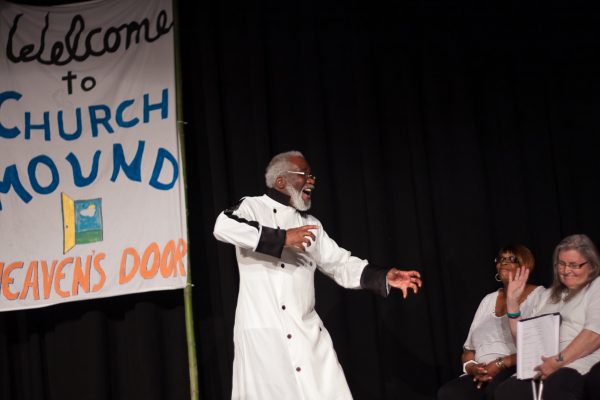
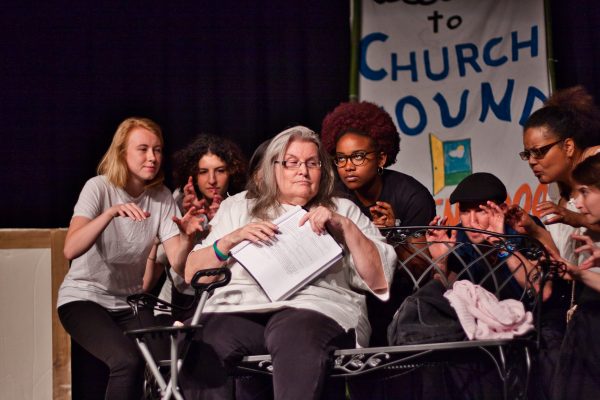
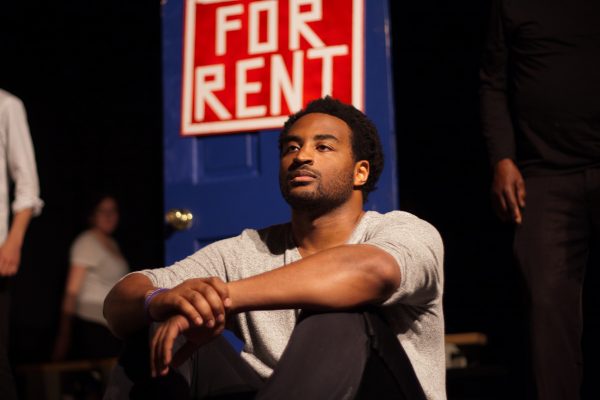
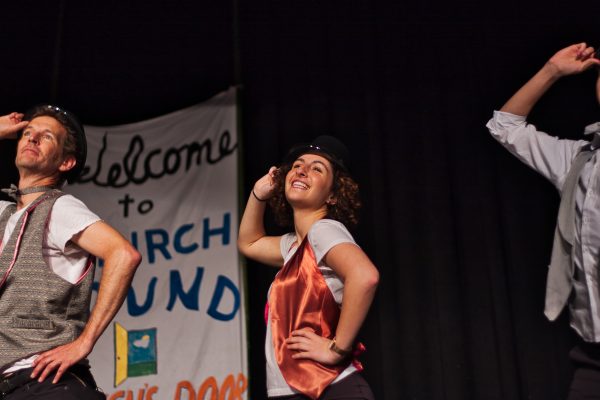
Through her work with both CPA and CEF, Rachel forged connections that led her to a new understanding of the role of performance in daily life. This experience carried into her academics, as well. In her senior year, she authored (and successfully defended!) an honors thesis that presented a “study of socially engaged art-making and micro-activism in Chapel Hill in 2019 and 2020,” based on her intersecting experiences of collaborating with CEF and CPA, and her study of “existing scholarship on artistic advocacy and ethnomusicological activism, inform[ing] my argument for the significance of micro-activism and socially engaged art making.”
Finding new pathways for pedagogy and participation is at the core of CPA’s engagement work, and the work extends long after the curtain falls on a performance. From Rachel’s thesis:
“When you sing a song for an audience, you can immediately witness their reaction and feel a connection. Within the strong relationships that are built through music, participants in collective creation can see others change over the course of a musical project or collaboration. This was the kind of impact I was searching for, and one I witnessed through Affordable Housing: The Musical.”
When Rachel came to UNC, she didn’t know how her passions of music, advocacy, and academia would evolve and mesh as they have done. And for CPA, getting to encourage and help make these connections for students and community members is an integral part of the “backstage” work we do.
Ellie Pate is an artistic coordinator at Carolina Performing Art, working both in artist services and in engagement.
CEF serves and supports Orange County residents experiencing housing insecurity, and its work is just as urgent as ever: in the face of COVID-19, members without housing are some of the most vulnerable to the virus, and those with housing face financial uncertainty from economic turmoil. If you are able, you can support this crucial work by donating directly to Community Empowerment Fund or The Marian Cheek Jackson Center, or by donating a dinner through Vimala’s Curryblossom Cafe (contact Vimala’s for more information).
Fill Us In: Pedja Mužijević
Welcome to Fill Us In, our rapid fire fill-in-the-blank questionnaire inspired by the famous Proust questionnaire where we take a peek inside the minds of Carolina Performing Arts’ artists.
In this edition, we’re talking with bold and innovative pianist Pedja Mužijević who has defined his career with creative programming, unusual combinations of new and old music, and lasting collaborations with other artists and ensembles.

What is the best way to start your day?
Waking up.
What is the worst way to start your day?
Not waking up.
What would the title of your memoir be?
“I Got Away With It.”
What is something you splurge on?
Food and wine.
If you had a motto, what would it be?
Walk through every door that opens to you.
What person do you admire most?
Mahatma Gandhi.
What advice do you have for artists who are just starting out?
Question everything, most of all yourself.
How do you hope others describe you in three words or less?
I like him.
If you could transform into an animal, what animal would you be?
A friendly tiger.
What smell can transport you back to your childhood?
Watermelon.
What is the best piece of advice you’ve ever been given?
Do something kind to someone you don’t know everyday.
Ocean, bathtub, or pool?
Pool.
If you weren’t an artist what would your profession be?
Chef.
What is your favorite meal?
The next one.
What is your idea of a perfect day?
Playing chamber music with friends and cooking together.
What thing is necessary for you to make art?
Audience.
The “Last Live”: Reflections on Meredith Monk’s Cellular Songs
When was the last time you saw a live performance? Until recently, this was a simple question, but in this COVID era it calls to mind wistful memories of sitting beside friends and strangers in a dark space full of collective concentration.
In my recent conversations with UNC faculty and students, many responded to this question with a distant look followed by a pause or a sigh, signaling nostalgia and loss. Others became animated, enthusiastically recalling the energy in the performance hall or a late-night post-show debate over dinner.

For both me and professor Marc Callahan in the Department of Music, the answer to this question was Meredith Monk’s Cellular Songs, the last live performance that took place at Carolina Performing Arts in March 2020. The performance, which Callahan and his opera students attended, struck both of us as immediately singular, even before our current extraordinary circumstances. A pioneer of interdisciplinary experimental performance, Monk uses “the voice as an instrument, as an eloquent language in and of itself, expands the boundaries of musical composition, creating landscapes of sound that unearth feelings, energies, and memories for which there are no words.”
In Cellular Songs, Monk and her all-female ensemble embodied and vocally expressed a profound connectedness that resonated beyond the Memorial Hall stage and into the audience, where Callahan, his students, and I sat in disbelief. Afterward, student Imani Oluoch described this performance as “primal and primordial.” Her fellow student performer, Hannah Lawrence, recalled “the sense of community as each woman laid their head on each other’s shoulders before the lights faded out.”
“I gained from Cellular Songs…a renewed commitment to presence of mind in each instant I live.”
Carson gartner, unc opera student
Callahan’s students were particularly attuned to Monk’s performance, as they were deep into rehearsals for a student interpretation of Monk’s lyric-less opera Atlas, which was set to premiere on campus in early April 2020. Six months later, the opera students are yet to perform Atlas live. While the current remote semester unfolds, they are working on an Atlas film that they hope to publicly stream this winter (watch a clip here).
At Callahan’s urging, I made a brief Zoom visit to his class to prompt these undergraduate Monk experts to consider the gravity of their last live Meredith Monk performance. Their insightful reflections were as much about their individual reactions to Cellular Songs as they were about the arts as a practice of togetherness, a practice that has renewed poignancy after extended isolation. Carson Gartner shared, “I gained from Cellular Songs (albeit on a slight delay) a renewed commitment to presence of mind in each instant I live.” Mackenzie Smith wrote that delving into Monk’s practice encouraged her “to learn and explore within the uncertainty.”
For me, the words of these students feel like important lessons for this time. Indeed, I see Carolina Performing Arts’ current pause in live performance as an opportunity to reimagine our organization, to recommit to our theaters not only as stages for performance, but as spaces where artists and audiences are invited to come together to embrace the uncertainty of the live.
Amanda Graham is the associate director of engagement at Carolina Performing Arts. Through her work, she regularly engages with faculty and students across campus. Currently, she is cohosting Feedback: The Institute for Performance, a new set of free virtual courses on performance open to adults in the Triangle.
Fill Us In: Abigail Washburn
Welcome to Fill Us In, our rapid fire fill-in-the-blank questionnaire inspired by the famous Proust questionnaire where we take a peek inside the minds of Carolina Performing Arts’ artists.
In this edition, we’re talking with Grammy-winning singer, songwriter, and banjo player Abigail Washburn, a CPA/Andrew W. Mellon Foundation DisTIL artist-in-residence and the first guest artist on The Spark with Tift Merritt.

Fill Us In: Tift Merritt
Welcome to Fill Us In, our rapid fire fill-in-the-blank questionnaire inspired by the famous Proust questionnaire where we take a peek inside the minds of Carolina Performing Arts’ artists.
In this edition, we’re talking with beloved singer/songwriter Tift Merritt, a Raleigh native and UNC alumna who took the music world by storm with the release of Bramble Rose.

Mitsuko Uchida and Mahler Chamber Orchestra at Home
Watch: MCO associate member and violinist Stephanie Baubin plays Bach’s Prelude in E major specially for Chapel Hill. Watch this exclusive video here.

You can also watch other videos from the MCO’s #KeepPlaying campaign.
Listen: We’ve curated a playlist featuring Mitsuko Uchida playing the Mozart concertos planned for their March 2020 visit to Chapel Hill. You can even read along with our program notes for these pieces.
RE:Rosas Collaboration
In October 2019, Carolina Performing Arts collaborated with University Libraries for a series of pop-up performances by UNC students and dancers from ShaLeigh Dance Works in Durham, in advance of CPA’s presentation of ROSAS DANST ROSAS, the work that put choreographer Anne Teresa De Keersmaeker’s company Rosas on the map 30 years ago.

RE:Rosas is an ongoing global project in which anyone can learn the moves to this seminal choreography and upload their video to the Rosas website. This pop-up took place in several segments at UNC’s Davis and Wilson Libraries.
Flutronix at Home
This story was originally posted as part of CPA at Home, our COVID-era digital content platform.
Watch: Nathalie Joachim sings us a small excerpt from Discourse, created especially for the Chapel Hill community, from her living room.
Listen: We’re working hard with our partners at University Libraries to reschedule the audio-visual installation created as a companion to Discourse. In the meantime, you can listen to some of the oral histories featured in Flutronix’s work, like the Ruth Dial Woods’ conversation from the Southern Oral History Program archives.
We’ve also curated a Spotify playlist of past Flutronix favorites, approved for home workouts and kitchen dancing by the CPA staff.

Explore: Check out the amazing local histories preserved by the Marian Cheek Jackson Center’s Oral History Trust, or accounts captured by Community Empowerment Fund—both Discourse project partners.
A Virtual Graham Masterclass

Jess Abel is the Marketing and Communications Manager at Carolina Performing Arts, and had the pleasure of joining intermediate and advanced UNC student dancers in CPA’s inaugural virtual masterclass, led by Martha Graham Dance Company dancer Leslie Williams, on August 20, 2020.
After a trying week for the UNC community, starting the Martha Graham Dance Company masterclass––CPA’s first-ever virtual masterclass––with a few moments of deep breathing led by Graham dancer Leslie Williams felt both settling and profound.
We inhaled and exhaled to the count of eight from our living rooms, bedrooms, garages, and home offices, connected by Leslie’s voice and identical movements as we moved on to stretching and then to Graham technique over Zoom. As we moved, we pictured ourselves on beaches and in meadows, we related the concavity of Michelangelo’s Pietà to Graham’s iconic and striking poses, and we became more fluid with our movements.

Particularly striking was the ease and grace with which Professor Heather Tatreau’s dance students learned the movements amidst the physical distance and less-than-ideal studio settings (trading in Marley dance flooring for shag carpeting, for instance, can’t be easy). But the energy of the class was that of literal and mental flexibility, positivity, and resilience.
By the end of the hour, the home office I was dancing in seemed to become an extension on Leslie’s studio. It was challenging and freeing, private and communal all at once, and as we were nearing cool-down two things were very clear to this arts lover: five months of quarantine had not been kind to my athletic abilities, and masterclasses will continue to be as deeply meaningful over Zoom as they ever were in person.
London Symphony Orchestra at Home
Watch: In the LSO’s latest Coffee Session––a piece of music chosen by LSO Players and recorded at home––LSO violinist Rhys Watkins and cellist Rowena Calvert perform Csárdás by Italian composer Vittorio Monti, with a special message for the Chapel Hill community.
The LSO is also streaming their concerts from the vaults every Thursday and Sunday. Sir Simon Rattle and the LSO’s other esteemed conductors are excited to welcome you to their new concert format. And, join the LSO every Monday morning for more Coffee Sessions with their orchestra members.

Listen: Tune in to our playlist version of the LSO’s planned two-night engagement at CPA. You can even read along with our program notes. Or, for an LSO playlist perfect for concentration through your work or school day, check out our favorite London Symphony Orchestra recordings.