The Power of Giving: Stories Behind Carolina Performing Arts’ Success
By Lauren Wingenroth
Rachel Baum can’t exactly remember what was on the program the first time she attended a Carolina Performing Arts show as an undergraduate at the University of North Carolina at Chapel Hill over a decade ago. It may have been the acclaimed banjo player Béla Fleck, or possibly Alvin Ailey American Dance Theater. What she is sure of: After that night, she was hooked.
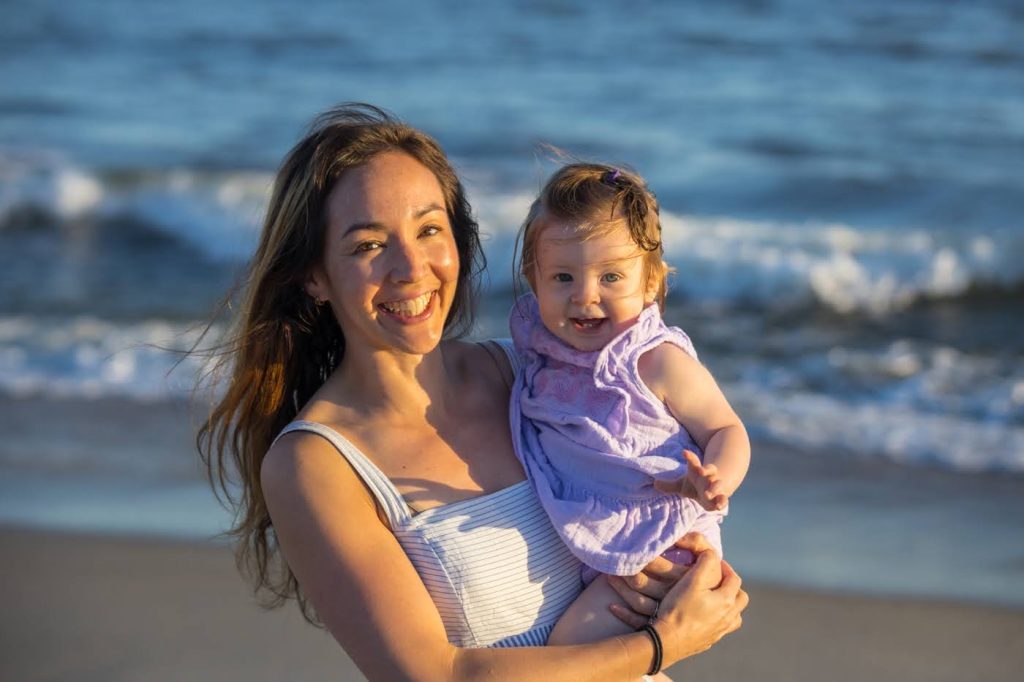
Baum spent the rest of her undergraduate career attending as many shows as she could, and when she stuck around to earn her PhD in Environmental Sciences and Engineering, she brought her grad school friends to Memorial Hall, too. “It was so fun to bring people in and see them get excited about it, especially their first time,” she says. “They’d be like, ‘I can’t believe this is so accessible to me as a student.’”
After a detour to the Bay Area for several years (she credits CPA with her interest in seeking out out-of-the-box performances while in San Francisco), Baum’s life recently came full-circle: She’s back in Chapel Hill, working at UNC’s Institute for Risk Management and Insurance Innovation, and continuing to see as many CPA shows as she can—but this time, as a donor.
For Baum, giving to CPA is about recognizing the impact that those performances—which were made possible by CPA’s $11 student ticket program—had on her life, and wanting all students to be able to have those same transformative experiences with the performing arts.
“I want students to be able to take advantage of this, and to help them blossom,” she says. “I want every single student to know about these tickets. If you just try it once, you’ll get hooked. And you’ll be like, ‘I need to go to every single one of these.’”
CPA celebrates its 20th anniversary this season, and throughout those past twenty years, donors like Baum—each with their own distinct relationship to the arts and reason for giving—have shaped the organization into what it is today, and helped secure its future for the twenty years to come.
“Every single time I see a show, there’s always something I get out of it,” says Baum. “As a donor, you’re opening that opportunity up to somebody, or you’re bringing a new performer into the light. You’re really opening up people’s perspectives, which I think is needed now more than ever.”
CPA “Continues to Feed My Soul”
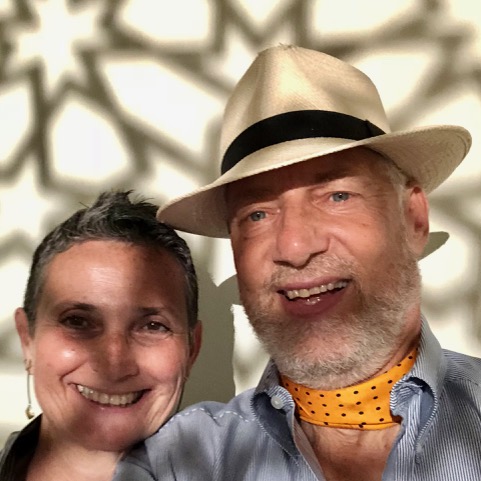
Having grown up watching avant garde performances in New York City’s Greenwich Village, David Roth prides himself on his penchant for boundary-pushing contemporary performing arts. That’s part of why Roth and his wife, Adele, created CPA’s Creative Collisions for Artistic Innovation Endowment, aimed at “giving a platform for diverse views, opinions and expressions, so that people can deeply appreciate the multitude of ways in which human beings can express their desire for common ends,” he says.
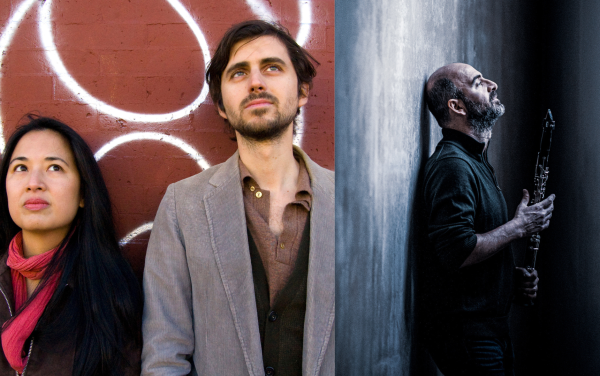
The first performance supported by the Endowment took place in October: Martha Redbone Roots Project and American Patchwork Quartet in This Land is Our Land, a stirring, soulful evening of music with eclectic influences from folk to gospel to jazz to West African. “She was just glorious,” says Roth of Redbone.
Supporting CPA has allowed Roth to see firsthand just how powerful the performing arts can be, both on a personal and community level. “What I’ve gotten from giving to CPA is the reward of knowing that the organization continues to feed my soul, and feed my heart, and feed the community,” he says. “When I see audiences let go of whatever defense they have and give themselves over to something, I think those moments are of extreme value, and contribute to creating a world of loving kindness and awareness.”
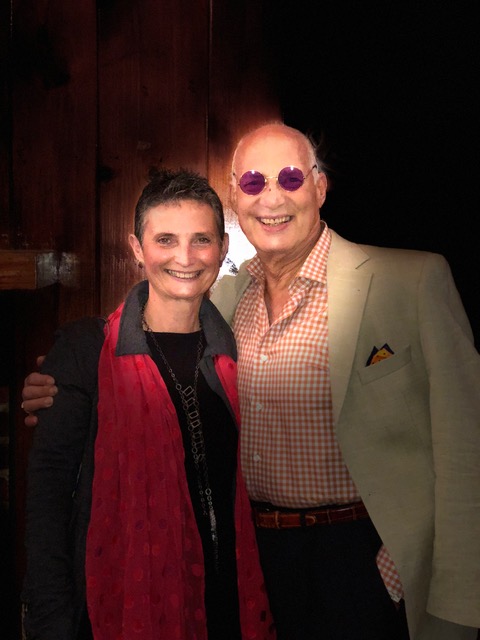

Julie Daniels, an alum who recently moved back to Chapel Hill and joined CPA’s board, agrees. “There’s nothing like sitting in a dark theater with a community of people and experiencing the same thing together,” she says. “It brings people together, and we need that now more than ever.”
A Sense of Belonging

Anyone can tap into the community atmosphere one often feels at a CPA performance. But those who are involved in the organization—whether through monthly or annual giving, or board service—often feel a deeper sense of belonging, which makes those performances all the more fulfilling.
“I know the behind-the-scenes,” says Jerri Bland, a CPA board member and founder of the Dr. Jerri Bland Fund for Student Access. “When you’re in the seat watching things you heard about six months ago, it’s a different feeling.”
It’s also special to chat with fellow patrons, and hear their perspective on CPA performances, says Bland. “You’re like, ‘I’m a part of that. I’m a part of helping to make this happen.’”
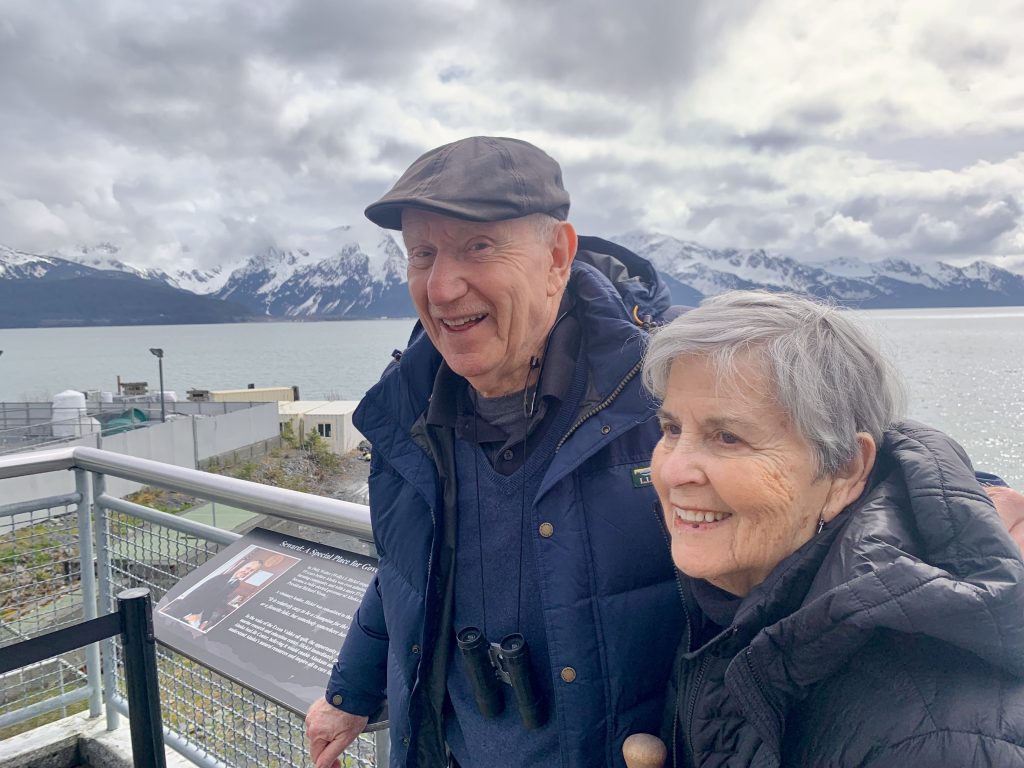
Ken Broun, who with his wife Margie has supported CPA since its founding, agrees. “You feel a sense of belonging,” he says. “Of, ‘this is our organization.’ It enhances the experience.”
The Brouns feel so connected to CPA that several years ago they moved to downtown Chapel Hill, partially to be closer to Memorial Hall. (Ken jokes that “as we get older, we feel that they’re moving it further away every year.”)
After twenty years of patronizing CPA and even longer supporting the arts in Chapel Hill, they appreciate that Memorial Hall is often full of friends and familiar faces.
But they also “find it delightful when we notice a whole different mix of audiences,” says Margie. “Sometimes when we know less people, we enjoy it—I enjoy seeing the different groups that different performances attract, and how even the type of dress people wear depends on the performance. It’s fun to see the diversity. I really like that CPA has widened so that there are different performances that appeal to people other than people like us.”
For the Roths, CPA helped them find belonging in Chapel Hill. “We moved here in 1997 from New York, and it took us a while to acclimate to the community,” he says. “A turning point was in 2004,” when CPA was founded. “Everything just seemed to align—something clicked for us,” he says.
Opening Doors to the Arts
The fact that finding that sense of belonging at CPA isn’t conditioned upon being a certain demographic, or having a certain taste in the performing arts, is at least partially made possible by the diverse breadth of CPA’s programming. But it’s also a product of CPA’s relative affordability, including the $11 tickets that are available to UNC students as well as local students of all kinds.
Those $11 tickets are supported by donors like Bland. “As an alum, I’m interested in making sure that the doors of CPA are open for everyone,” she says of her Fund for Student Access. “I want students to have the opportunity to see world class theater and world class music. I don’t want money to be a barrier for anyone; that’s why I created the Fund. It will be after I’m gone that students really have access to it, but I want to make sure that ability never goes away.”

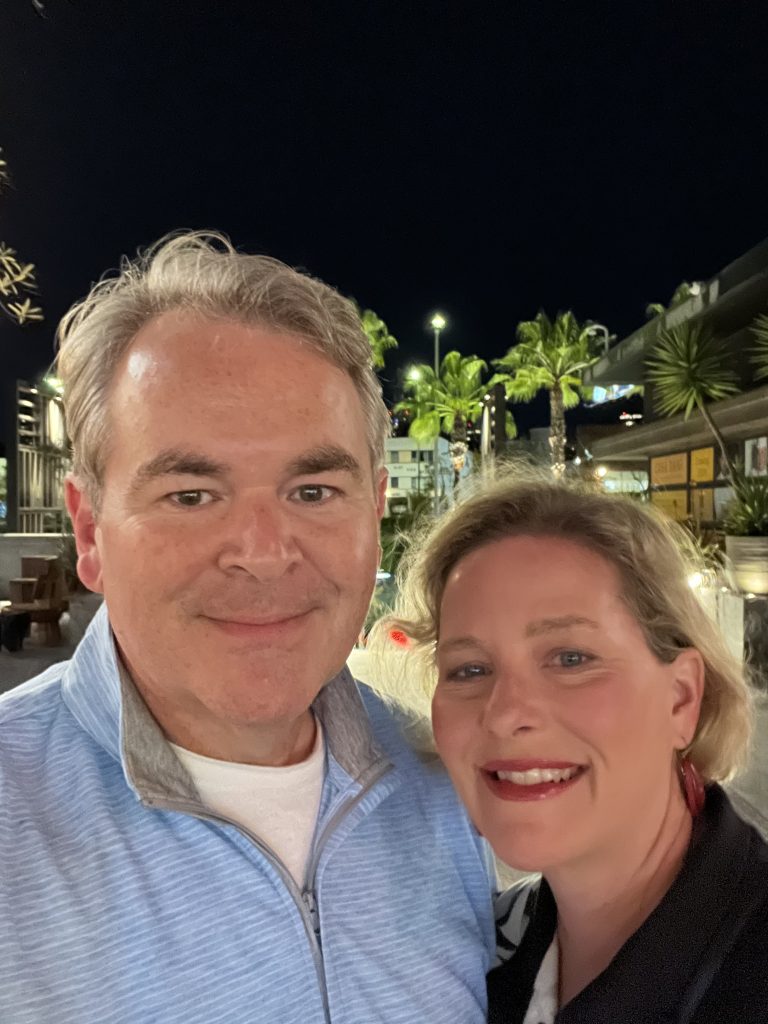
It’s not just getting students in the doors of Memorial Hall that donors like Bland enable, but making connections from the stage back to the classroom. “I think that’s an important thing for us as board members to think about,” she says. “We are art lovers, yes, but our need to go to performances is secondary to our need to educate about the arts. It’s easy to get wrapped up in, ‘Alvin Ailey is coming!,’ but we should think about what the impact is to the academics. How do we get the University as a whole engaged in this art?”
“I think that bringing high-quality art to this community enhances the attractiveness of the University overall,” says Ken. “And encouraging students to partake in it increases the educational experience.” He remembers observing a master class for UNC students taught by a musician from an orchestra in town with CPA. “I thought it was remarkable,” he says.
Daniels agrees, and believes that making connections between academics and the arts, “creates a well-rounded student,” she says. “We want people who are critical thinkers and who are exposed to a lot of different things, and the arts are a great way to do that. It’s a safe space; it’s a way for people to examine complex topics in a meaningful way with other people. It exposes students to something that will be a part of their life for the rest of their life.”
“Opportunities like these really solidify your relationship to the arts,” says Baum. “They’re a bridge to somewhere. I love it for students, because they’re young. Their minds are malleable, and they’re exploring things—it’s really powerful for them.”
Donors and board members have had their own artistic doors opened by CPA’s programming. For instance, the Brouns discovered Samara Joy, who has since become one of their favorite singers, and Daniels realized her love for dance after attending Hong Kong Ballet’s Romeo + Juliet last year. “I’ve started going to Carolina Ballet—I’m seeking out dance performances,” she says. “I told my daughter who lives in New York that I want to go to American Ballet Theater. Dance is really phenomenal, I just wasn’t exposed to it much.”
For Baum, seeing something new at CPA, “feels like a dopamine hit to your brain,” she says. “There’s this novelty, this excitement, that really grabs you.” One young potential patron she’s particularly interested in exposing to the arts? Her infant daughter (who has already attended one CPA event!). “I want her to grow up seeing the arts and being engrossed in them,” Baum says.
“I’m Hoping to Share it With As Many People As I Know”
Bland sees serving on CPA’s board as a chance to shape the organization’s future for generations of audiences to come. “It’s a huge opportunity to not only benefit personally from supporting the arts, but to share that love with other people,” she says. “Giving CPA—the staff, the student volunteers—that support, and letting them know we’re here and available to give feedback. We can shape what this organization looks like. In five or ten years, the things we’re doing today are going to be taking fruition and having an impact on what students and audiences are experiencing. It’s an opportunity to have a voice in what’s happening in our community.”
Of course, financial gifts are also key to sustaining CPA programming—and anyone can contribute. “All contributions are important, at any level,” says Daniels. “You can contribute what you can afford—everything makes a difference, and that support is something CPA counts on. If we want to see this level of programming continue, we have to be willing to make those donations so the organization can thrive.”
“There are so many ways to contribute value,” says Roth. “One is financially. Another is to participate in some way; to make your voice heard. Nothing’s too small.”
Roth recognizes that while he has a taste for new, groundbreaking performances, others in his demographic feel more comfortable with the familiar. And while there’s nothing wrong with that, Roth sees an opportunity to “be a liaison, as a senior, between CPA and that community,” he says. “I’m committed to supporting how CPA is approaching their future with the hope that they can bridge that gap and encourage people to go along for the ride, take the risk, and enjoy the risk.”
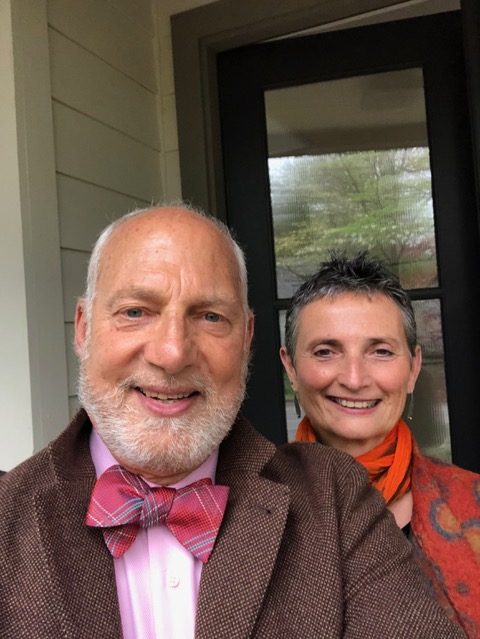
In this way, supporting CPA doesn’t have to look like giving money or even time or resources—it can be about ambassadorship, and advocacy. “I’m really excited to let more people know about CPA,” says Daniels. “That’s one of the things I can do, expose people who may not know about it to how great it is, get them to come to a show. Because if they come, they’ll come back. I’m hoping to share it with as many people as I know in the community.”